Aller au contenu
Himalayan Trek Quest
WhatsApp +9779769211118
Préparez votre trek
Treks au NépalGalleryÀ proposContactGuides de trekFAQPréparez votre trek

Trekking in Nepal with kids

Nepal's lower trails suit children well: short days, a lodge in every village and big mountain views without high altitude. Here are the best family treks by age, what the CDC and UIAA advise on altitude, permits for children and what a family trek costs.

Family trekking at a glance

Easiest first trek
Australian Camp & Dhampus: 2 days from Pokhara, one night at 2,060 m
Altitude
The CDC says children are as susceptible to altitude sickness as adults
Permits
Children under 10 do not need the ACAP permit (NTNC)
Teahouses
Simple twin rooms, dal bhat, noodles and pasta on the menu
Family price
Price per person drops with group size, lowest for eight or more
Best seasons
October–November and March–April

Can you trek in Nepal with children?

Yes, on the right trek. The foothills around Pokhara and Kathmandu have short stages, a teahouse in every village and mountain views from below 2,500 m, so young children can trek there without the altitude becoming the main worry. Older children and teens can go higher, to 3,000–4,000 m, if the itinerary climbs slowly and you are ready to turn back.

What makes a trek work for a family is not the distance on the map but four things: the highest place you sleep, the longest walking day, how many stone steps there are, and how easily you can go down or out if a child is unwell or tired. The table below gives those for every trek we suggest.

Every trek on this site is a private trek for your own party, with a licensed guide from the local operator that runs it. You set the pace, and on several treks an extra night can be added. Since 31 March 2023 a licensed guide is required on most protected-area routes in any case; read do you need a guide to trek in Nepal. Tell us your children's ages when you enquire, and we check with the operator and confirm the plan in writing before you pay.

Altitude and children

Children get altitude sickness as often as adults, not more and not less. The CDC Yellow Book puts it plainly: “Children are as susceptible as adults.” The difference is that they are harder to read. The CDC notes that “preverbal children with AMS can develop loss of appetite, irritability, and pallor”, so a toddler who suddenly will not eat, cries more than usual or looks pale at a new height may be telling you something. The UIAA Medical Commission adds that young children “are not reliable reporters of symptoms, even when they can talk”, and advises treating symptoms at altitude as altitude-related until proven otherwise.

The same ascent rules apply

Children need about as long to acclimatise as adults, and the CDC's ascent advice is the same for everyone:

  • avoid going straight to a sleeping altitude above 2,750 m;
  • above 3,000 m, raise your sleeping altitude by no more than 500 m a day;
  • add an extra acclimatisation day for each further 1,000 m.

Preschool children

For preschool children the UIAA advises against sleeping higher than 3,000 to 4,000 m, and suggests a sleeping altitude below 2,500 m where possible. This is advice, not a rule: the UIAA itself says there is no conclusive scientific data. It is why our suggestions for young children all sleep at about 2,000–2,200 m. The UIAA also advises that small children should be completely healthy when they go to altitude, so a child with a cold or a tummy bug is better off resting low down for a day.

See a travel doctor

Before you go, see a travel doctor about each child, especially for any trek that sleeps above 2,500 m. Ask about altitude medicines, vaccinations and what to carry in your first-aid kit. Do not give children altitude medicines without a doctor's advice. On the trail, the guide checks the group each evening; if a child is unwell, the answer is to stop or go down. Read more in our guide to altitude sickness in Nepal.

Best family treks in Nepal by age

These are the best family treks in Nepal from our list, grouped by the age they usually suit. The ages are guidance only: a seven-year-old who walks every weekend may manage more than a sporty teenager who never does. Prices are per person in US dollars for a private trek, as shown on each trek page.

Family treks compared: altitude, walking days and price
TrekDaysHighest pointHighest nightWalking a day1 personEach, for 4–7Usually suits
Australian Camp & Dhampus22,060 m2,060 m (Australian Camp)2–5 hUS$175US$125Young children
Ghandruk Village42,080 m2,060 m1–5 hUS$380US$275Young children who walk well
Chisapani Nagarkot32,430 mAbout 2,200 m (Chisapani)3–7 hUS$375US$265Young children used to long walks
Ghorepani Poon Hill43,210 m2,874 m (Ghorepani)2–7 hUS$410US$295Active older children
Mohare Danda53,300 m3,300 m (Mohare Danda)2–7 hUS$495US$365Active older children
Mulde Viewpoint53,637 mAbout 3,420 m (Dobato)2–8 hUS$495US$365Active older children
Mardi Himal54,200 mAbout 3,580 m (High Camp)3–8 hUS$475US$350Teens
Langtang Valley84,984 m (Tserko Ri)3,870 m (Kyanjin Gompa)3–9 hUS$850US$620Teens
Everest View83,880 m3,780 m (Khumjung)2–6 hUS$1,395US$1,095Teens
Tamang Heritage Trail73,165 m2,607 m (Tatopani)3–7 hUS$795US$560Teens
Helambu93,650 m3,650 m (Tharepati)3–7 hUS$840US$585Teens

Young children: Australian Camp, Ghandruk and Chisapani Nagarkot

Australian Camp & Dhampus is the easiest family trek near Pokhara. You drive about an hour to Kande and climb under two hours to a ridge facing Machhapuchhre and Annapurna South, with the afternoon free and sunrise from the teahouse next morning. Day two is four to five hours, mostly downhill; smaller children may need a hand on the long stone steps down to Phedi. Ghandruk Village takes four days through the Gurung villages of Ghandruk and Landruk to Australian Camp, with four to five hours a day on the first three days and a short last day. A night can be added in Ghandruk if you want a slower pace. Chisapani Nagarkot starts from Kathmandu and suits children who already walk a lot: the second day is six to seven hours, though a vehicle can shorten it.

Active older children: Poon Hill, Mohare Danda and Mulde

Ghorepani Poon Hill is the classic family trek in Nepal. The highest night is at Ghorepani (2,874 m), and the dawn climb to Poon Hill is about an hour by head torch. The hard part is the first day's climb from Tikhedhunga to Ulleri, thousands of stone steps; see our Poon Hill trek guide. Mohare Danda uses small community lodges on a quieter ridge, with one night at 3,300 m and Nangi 1,000 m lower if anyone feels unwell. Mulde Viewpoint adds a second sunrise and a night at Dobato (about 3,420 m); day three is seven to eight hours, so it suits strong walkers.

Teens: Mardi Himal, Langtang, Everest View, Tamang Heritage and Helambu

Mardi Himal gains height quickly, from Pokhara to High Camp at about 3,580 m in three days, then to about 4,200 m on the morning of day four, and mild headaches at High Camp are common. Ask your doctor, and ask us about adding a night on the way up. Langtang Valley reaches the high mountains by road from Kathmandu, with two nights at Kyanjin Gompa (3,870 m) to adjust. Everest View flies to Lukla and sleeps at 3,440 m in Namche and 3,780 m in Khumjung; the guide can keep you in Namche instead of Khumjung. Tamang Heritage Trail stays lower, with homestay nights in Tamang villages and the highest night at 2,607 m. Helambu is nine days of steep stone steps with the highest night at Tharepati (3,650 m), a good choice for teens who like a proper journey.

Not sure which suits your family? Our best treks for beginners compares the easier routes in more detail.

Family treks from Pokhara, with lake days

Pokhara is the easiest base for a family trek in Nepal. Australian Camp, Ghandruk, Poon Hill, Mohare Danda, Mulde and Mardi Himal all start and end at your hotel in Pokhara, so you can trek for two to five days and spend the rest of the holiday by Phewa Lake. It is about 25 minutes by air from Kathmandu, or six to eight hours by tourist bus.

A simple plan

  • Arrive and rest: a day or two by the lake before the trek lets children get over the journey. Walk the shore path, row out to the Tal Barahi temple or take a boat across to the World Peace Pagoda and walk up through the forest.
  • Trek: two days to Australian Camp for young children, or four to five days to Ghandruk, Poon Hill or Mohare Danda for older ones.
  • Recover by the lake: Davis Falls, Gupteshwor Cave and the International Mountain Museum fit into half a day, and the museum is a good rainy-day stop.

On the water everyone must now wear a life jacket, and water activities stop at 6 pm. Check age limits before you promise anything adventurous: the ZipFlyer, for example, has a minimum age of 13, and standard travel insurance often excludes paragliding and bungee. See things to do in Pokhara for prices and opening times, and short treks from Pokhara for every route from a day hike up.

Do children need trekking permits in Nepal?

Children under 10 do not need the Annapurna Conservation Area (ACAP) permit. The NTNC, which issues it, states that “children below 10 years do not require a permit”. That covers every Pokhara trek on this page. For adults and children aged 10 and over the ACAP fee is NPR 3,000 for foreign nationals and NPR 1,000 for SAARC nationals.

National parks: for Sagarmatha (Everest) and Langtang National Parks, an older Nepal Tourism Board fee sheet lists children under 10 as free, and most guides agree, but the current park fee schedule was not available to check. The Khumbu Pasang Lhamu municipality, which charges its own entry fee in the Everest region, says children under 10 enter free with documents. We confirm the current rules for your dates when you book.

Permits are included in the trek price and arranged by the operator, so you do not queue for them yourself. When you book, send a scan of the passport photo page for everyone in the family, children included. More detail in Nepal trekking permits.

Teahouses with kids

Teahouses are simple, warm in the dining room and easy with children. You sleep in small twin rooms with two single beds, a foam mattress, a pillow and a blanket. There is no heating in the rooms and the walls are thin. Some lodges charge per room and some per person, and the operator books them as part of your trek, so ask us how rooms are arranged for your family when you enquire. On the Mohare Danda trail the community lodges are basic, with shared toilets and limited hot water.

Food

Menus are longer than you might expect. Children who are fussy eaters usually find something: noodles, fried rice, pasta, potatoes, eggs, porridge, pancakes, chapati and Tibetan bread. Dal bhat, rice with lentil soup and vegetable curry, comes with free refills in most lodges and is the best fuel on the trail. Bring a few favourite snacks from Pokhara or Kathmandu for the long climbs.

Water

Do not let anyone drink untreated tap or stream water. Buy boiled or filtered water at the lodges, about NPR 50–150 a litre in the Annapurna foothills, or use the Safe Drinking Water stations in the Annapurna region. A tip from the trail: fill a metal bottle with boiling water at night and put it in the sleeping bag. It is a hot-water bottle until morning and drinking water by breakfast.

Charging, showers and evenings

Charging, hot showers and wifi cost extra in most lodges. In the Annapurna foothills charging is free to about NPR 200 per device; at Mardi High Camp it is NPR 300–500. A power bank saves arguments over whose tablet comes first. There are no ATMs on the trail, so bring cash in Nepali rupees. Evenings are spent round the dining room stove, and most people are in bed by 8.30 pm, so a pack of cards or a small game goes a long way. Read more about teahouse trekking in Nepal.

Packing for kids

Pack for warm days and cold nights. For each child: layers they can add and take off, a warm hat and gloves, a sun hat and sunscreen, a light rain jacket, shoes they have already walked in, a head torch, their own water bottle and a small daypack for snacks. Add a first-aid kit with anything your travel doctor recommends. Many treks include the loan of a down jacket and sleeping bag; ask whether child sizes are available for your dates. The full list is in our Nepal trekking packing list.

Travel insurance for a family trek

Every member of the family needs travel insurance that covers trekking. The policy must cover trekking up to the highest altitude on your itinerary, emergency medical treatment and helicopter evacuation from that altitude, and it is a condition of booking. Check that the children are named on the policy and that the altitude limit in the wording is above your trek's highest point. If you plan paragliding or other adventure activities in Pokhara, check those too; standard policies often exclude them. See travel insurance for trekking in Nepal, and trust and safety for what happens in an emergency.

Best time to trek in Nepal with kids

October–November and March–April are the best months for families. Autumn gives the clearest views and settled weather; spring is warmer, with rhododendrons in flower on the Annapurna ridges. During the Dashain and Tihar festivals, which fall in October or November, lodges at Ghorepani and in Myagdi fill with Nepali holidaymakers too, so book early.

December to February is cold at night but fine for the low treks such as Australian Camp and Ghandruk; snow and ice can lie on the ridge to Mulde from December to early April. From June to September the monsoon brings rain, leeches and cloud, which few children enjoy. More in the best time to trek in Nepal.

What does a family trek in Nepal cost?

The price per person drops with group size, and it is lowest for a party of eight or more. Every trek is private for your own party, and each trek page shows four prices: for one person, for two or three, for four to seven, and for eight or more. A family of four on the Ghorepani Poon Hill trek pays the four-to-seven rate of US$295 each, US$1,180 in all, against US$410 for one person on their own. On Australian Camp & Dhampus the price for four to seven is US$125 each, US$500 for a family of four. Two families trekking together as a party of eight pay US$270 each on Poon Hill.

Children pay the same price as adults and count towards your group size, so a family of four pays the 4–7 rate for everyone. There is no separate child price. If a small child will need carrying, an extra porter can be arranged on request for an extra charge; we confirm it with the operator in writing before you pay.

What is included is listed on each trek page, usually the licensed guide, permits, teahouse rooms, meals on the trek and road transfers. Drinks, snacks, hot showers, charging and tips are usually extra. Tell us the children's ages when you enquire, and we check with the operator and confirm the price for your family in writing before you pay. See how booking works, and if you are travelling with friends or another family, group treks in Nepal.

Family treks you can book

Every one of these is a private trek for your own family, with a licensed guide from the operator that runs it. The price per person drops with group size and is lowest for eight or more.

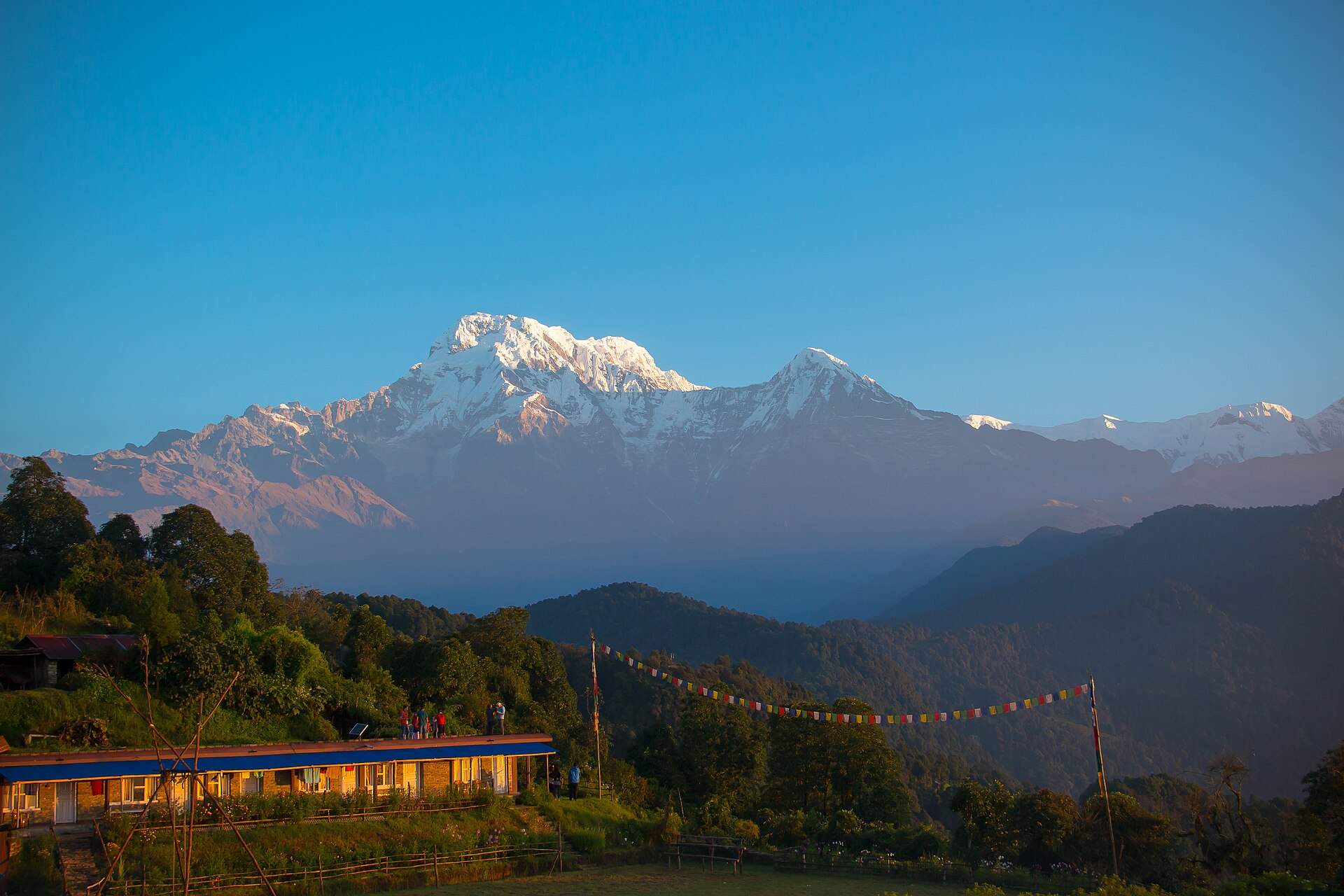
Lodge at Australian Camp below Annapurna South and Hiunchuli
Durée
2 jours
Niveau
Facile(1 sur 5)
Point culminant
2 060 m

Deux jours de marche depuis Pokhara jusqu'à Australian Camp (2 060 m), pour le coucher et le lever du soleil sur le Machhapuchhre et les Annapurna, avec un retour par Pothana et le village gurung de Dhampus jusqu'à Phedi. Le moyen le plus rapide, depuis Pokhara, de dormir face aux grands sommets.

Prochains départs

  • 1 déc. 2026500 places restantes
  • 2 déc. 2026500 places restantes
  • 3 déc. 2026500 places restantes

+57 autres dates

À partir de

175 $USpar personne

Voir le voyage
Ghandruk with Annapurna South, Hiunchuli and Machhapuchhre behind
Durée
4 jours
Niveau
Facile(1 sur 5)
Point culminant
2 080 m

Une boucle de quatre jours depuis Pokhara jusqu'à Ghandruk (2 010 m), l'un des plus grands villages gurungs du Népal, puis de l'autre côté de la Modi Khola jusqu'à Landruk et par la crête jusqu'à Australian Camp. Sentiers de basse altitude, villages de pierre et vues rapprochées sur l'Annapurna Sud, le Hiunchuli et le Machhapuchhre.

Prochains départs

  • 1 déc. 2026500 places restantes
  • 2 déc. 2026500 places restantes
  • 3 déc. 2026500 places restantes

+57 autres dates

À partir de

380 $USpar personne

Voir le voyage
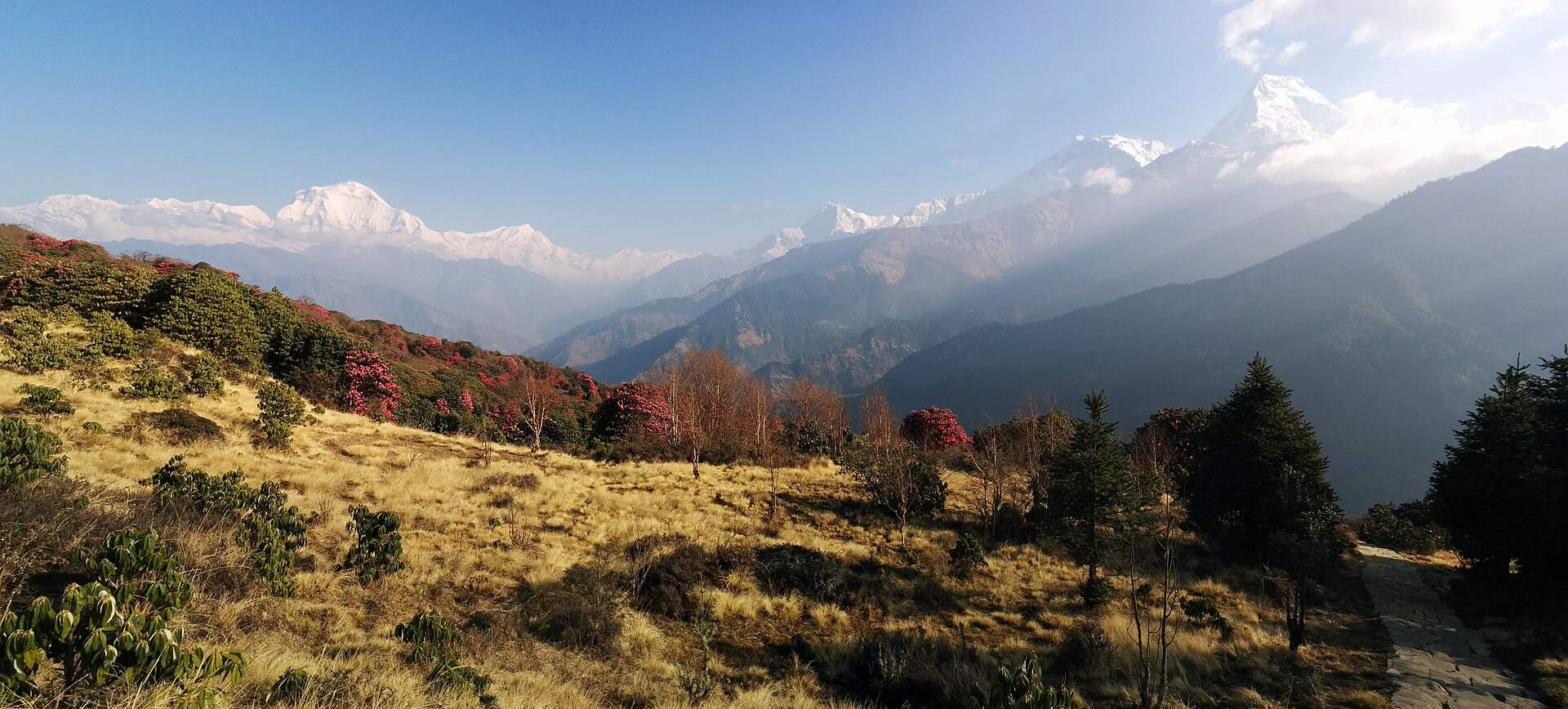
Dhaulagiri and the Annapurna range from Poon Hill, with rhododendrons in flower
Durée
4 jours
Niveau
Facile(1 sur 5)
Point culminant
3 210 m

Une boucle de quatre jours depuis Pokhara par Ulleri et Ghorepani pour assister au lever du soleil sur le Dhaulagiri et les Annapurnas depuis Poon Hill (3 210 m), avec retour par la forêt de rhododendrons jusqu'à Tadapani et au village gurung de Ghandruk. Court, peu élevé et riche en vues sur les montagnes.

Prochains départs

  • 1 déc. 2026500 places restantes
  • 2 déc. 2026500 places restantes
  • 3 déc. 2026500 places restantes

+57 autres dates

À partir de

410 $USpar personne

Voir le voyage
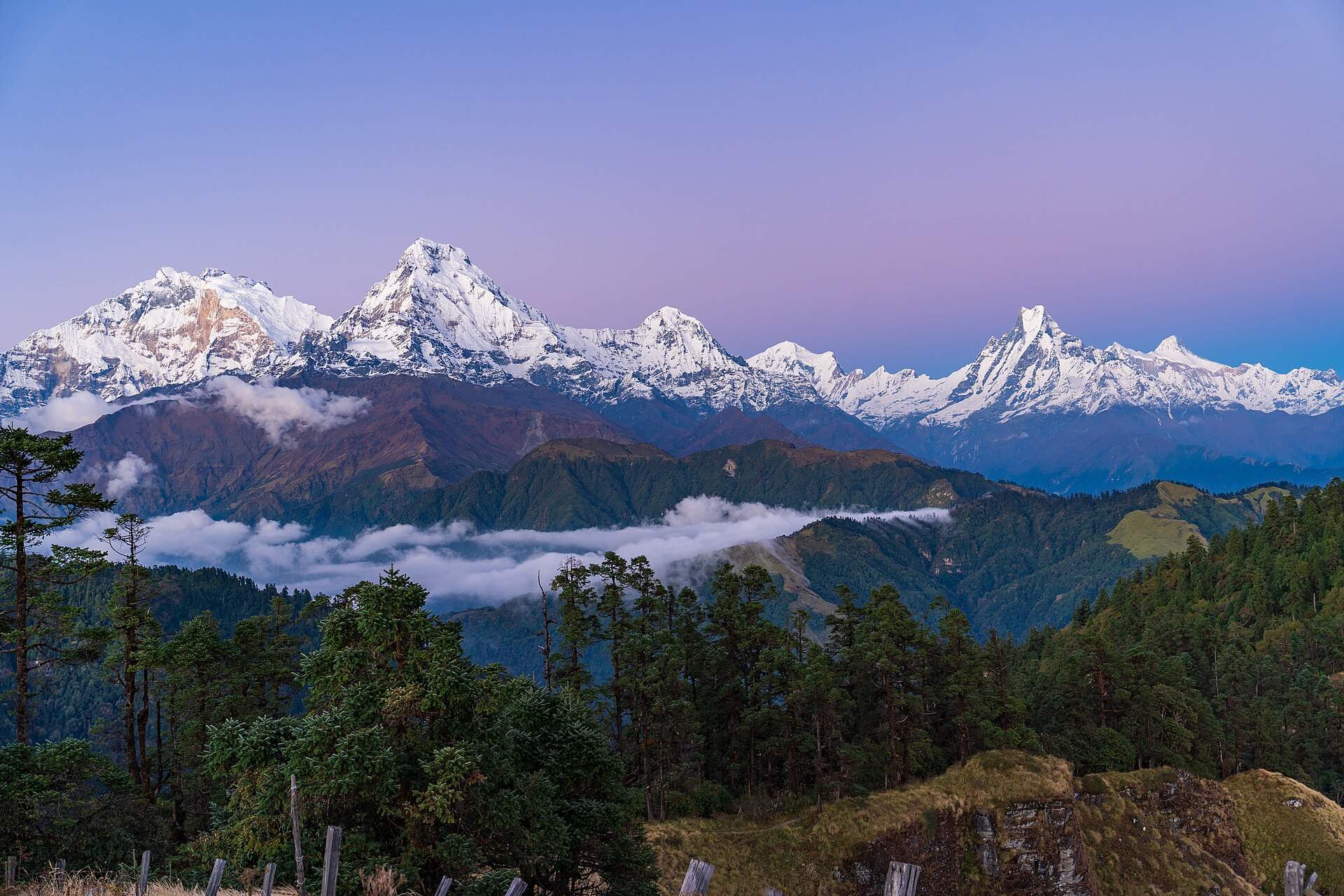
Annapurna South, Hiunchuli and Machhapuchhre after sunset, seen from Mohare Danda
Durée
5 jours
Niveau
Modéré(2 sur 5)
Point culminant
3 300 m

Un trek de 5 jours au départ de Pokhara sur le sentier des éco-lodges communautaires du Myagdi : de Galeshwor, on traverse les villages magar de Banskharka et de Nangi jusqu'au lodge perché sur la crête de Mohare Danda (3 300 m), puis on suit la crête boisée jusqu'à Ghorepani pour le lever du soleil à Poon Hill, avant de redescendre à Tikhedhunga.

Prochains départs

  • 1 déc. 2026500 places restantes
  • 2 déc. 2026500 places restantes
  • 3 déc. 2026500 places restantes

+57 autres dates

À partir de

495 $USpar personne

Voir le voyage
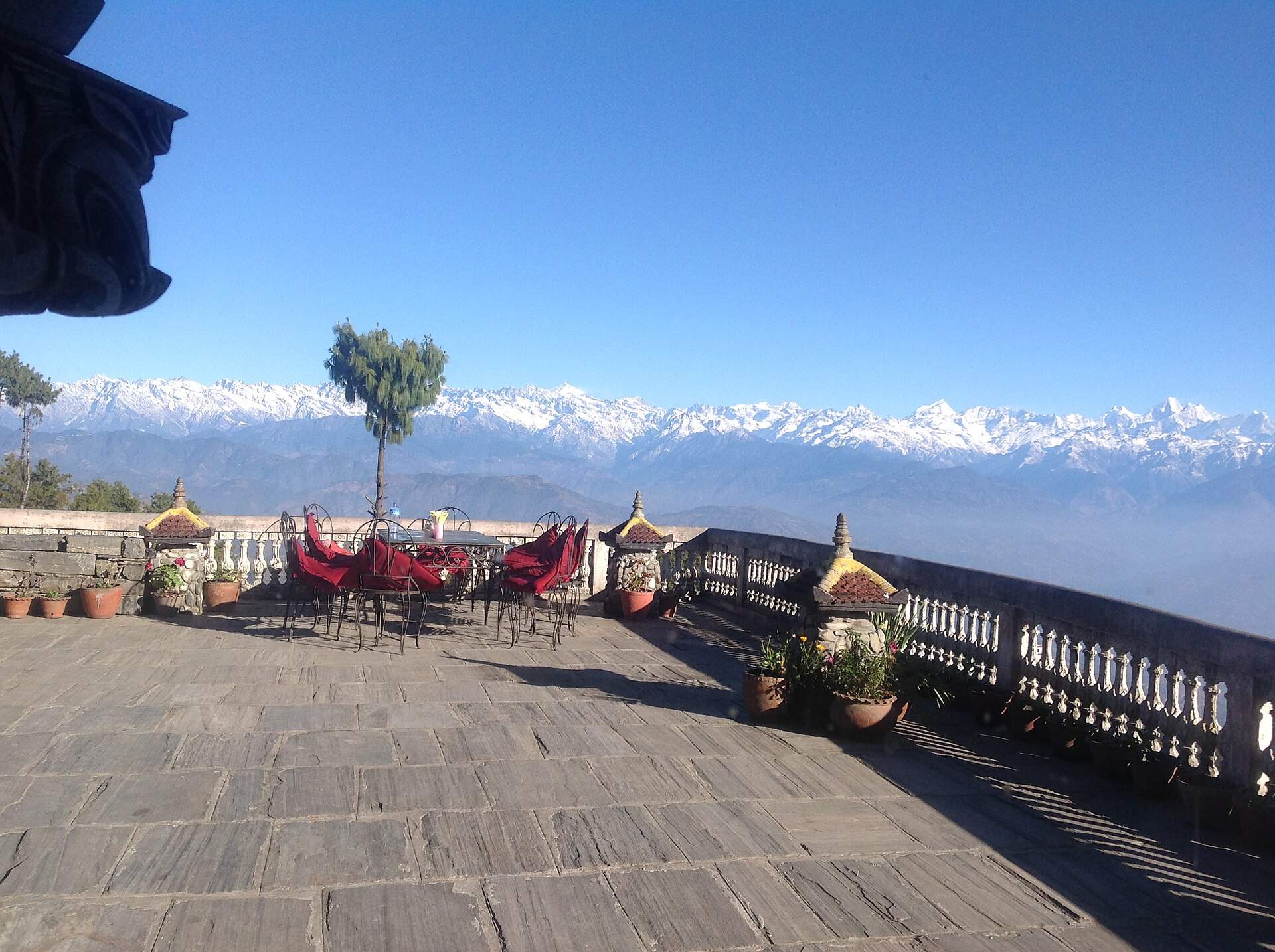
The Himalaya seen from a hotel terrace in Nagarkot

Vallée de Katmandou

Trek de Chisapani à Nagarkot

Durée
3 jours
Niveau
Facile(1 sur 5)
Point culminant
2 430 m

Trois jours de marche sur le rebord nord-est de la vallée de Katmandou : de Sundarijal à Chisapani (2 200 m) à travers le parc national de Shivapuri Nagarjun, puis par les crêtes jusqu'à Nagarkot, station d'altitude, et enfin jusqu'à l'ancien temple de Changu Narayan. Des vues sur l'Himalaya, du Langtang à la région de l'Everest, sans vol ni long trajet en voiture.

Prochains départs

  • 1 déc. 2026500 places restantes
  • 2 déc. 2026500 places restantes
  • 3 déc. 2026500 places restantes

+57 autres dates

À partir de

375 $USpar personne

Voir le voyage
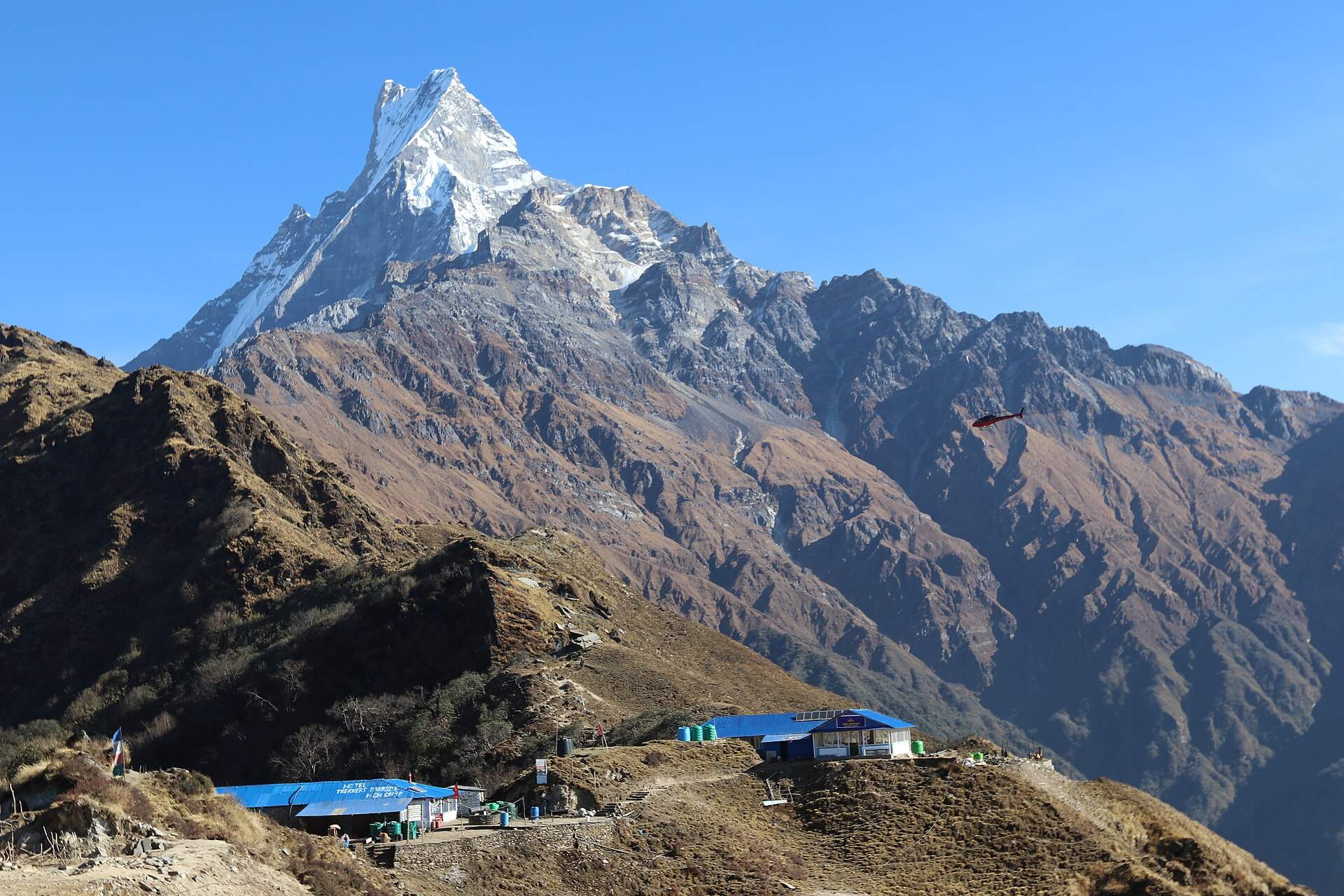
The lodges at High Camp with Machhapuchhre behind
Durée
5 jours
Niveau
Modéré(2 sur 5)
Point culminant
4 200 m

Cinq jours au départ de Pokhara sur la crête boisée qui file vers le nord en direction du Machhapuchhre, avec des nuits à Forest Camp, Low Camp et High Camp (3 580 m), avant une montée à l'aube jusqu'au Mardi Himal Upper View Point, vers 4 200 m. Un itinéraire plus calme, avec des vues rapprochées sur le Machhapuchhre et l'Annapurna Sud, qui redescend vers Siding pour le retour en voiture.

À partir de

475 $USpar personne

Voir le voyage

Family trekking questions

What age can children start trekking in Nepal?

There is no single right age; it depends on the trek and the child. Young children who are used to walking a few hours manage the low treks near Pokhara, such as Australian Camp and Ghandruk, which sleep at about 2,000 m. Poon Hill, Mohare Danda and Mulde suit active older children, and treks that sleep above 3,500 m, such as Mardi Himal and Langtang, are better kept for teens. For preschool children the UIAA advises a sleeping altitude below 2,500 m where possible. Treat all of this as guidance and ask your travel doctor.

What is the easiest family trek in Nepal?

Australian Camp and Dhampus. It takes two days from Pokhara, with under two hours of walking on the first day, one night at 2,060 m and a mostly downhill second day of four to five hours. It costs US$125 each for four to seven.

Do children need trekking permits in Nepal?

Children under 10 do not need the ACAP permit for the Annapurna region, according to the NTNC, which issues it. For Sagarmatha and Langtang National Parks an older Nepal Tourism Board fee sheet lists children under 10 as free; we confirm the current rules for your dates when you book. Permits are included in the trek price.

Can children get altitude sickness?

Yes. The CDC says children are as susceptible as adults, and the same ascent rules apply to them. Children who cannot yet talk may show it as loss of appetite, irritability or looking pale. See a travel doctor before you go, and if a child is unwell at altitude, stop or go down.

Is the Poon Hill trek suitable for children?

Yes, for active older children. The highest night is at Ghorepani (2,874 m) and the top of Poon Hill is 3,210 m. The first day's climb to Ulleri has thousands of stone steps, and you walk four to seven hours on each of the first three days, so it suits children who already walk a lot.

What do children eat on a trek?

Teahouse menus have plenty that children like: noodles, fried rice, pasta, potatoes, eggs, porridge and pancakes, as well as dal bhat with free refills. Drink only boiled or filtered water, and bring a few favourite snacks from Pokhara or Kathmandu.

How much does a family trek in Nepal cost?

The price per person drops with group size, and is lowest for eight or more. A family of four on the four-day Ghorepani Poon Hill trek pays the four-to-seven rate of US$295 each, US$1,180 in all, against US$410 for one person. Tell us the children's ages and we confirm the price for your family in writing before you pay.

Do children pay less on a trek in Nepal?

No. Children pay the same price as adults and count towards your group size, so a family of four pays the four-to-seven rate for everyone, for example US$295 each on Ghorepani Poon Hill. There is no separate child price. If a small child will need carrying, an extra porter can be arranged on request for an extra charge, and we confirm it with the operator in writing before you pay.

Can we book a private trek just for our family?

Yes. Every trek on this site is private for your own party, with a licensed guide from the local operator that runs it, named in your booking confirmation. You can ask for a slower pace or an extra night when you enquire, and we check with the operator and confirm the plan in writing.

Plan a family trek in Nepal

Tell us your dates and your children's ages. We check with the operator and confirm the trek, the pace and the price for your family in writing before you pay.

WhatsApp +9779769211118