Kori Danda Trek – 6 giorni
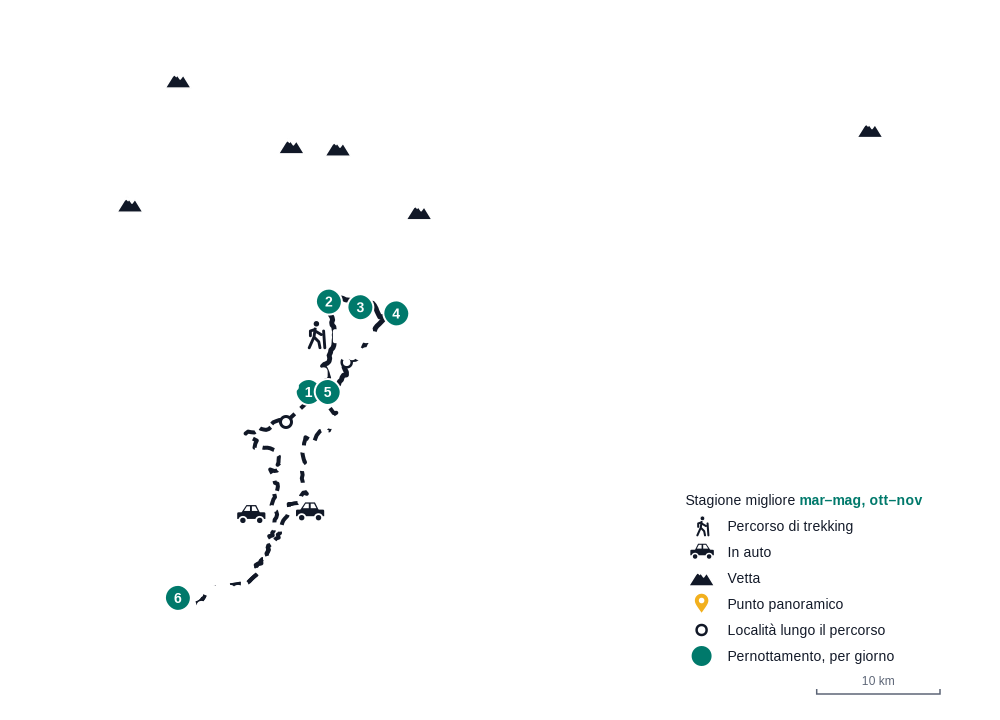
A six-day trek from Pokhara to Kori Danda, a grassy ridge at about 3,800 m facing Lamjung Himal, Annapurna II and Annapurna IV. You drive to the Gurung village of Sikles, walk up through forest to Hugu Goth and the herders' clearing of Nohtha, spend a night on the ridge for sunset and sunrise, and come down by a different trail through Tasa.
- Durata
- 6 giorni
- Difficoltà
- Impegnativo(3 su 5)
- Punto più alto
- 3850 m · Kori Danda viewpoint
- Mesi migliori
- mar–mag, ott–nov
- Partenza e arrivo
- Pokhara
- Cammino
- 3–8 ore al giorno
- Di gruppo o privato
- 1–10 persone
- Alloggio
- Ospiti in famiglia, Lodge, Campeggio
- Completamente guidato
- Guide che parlano inglese, nepalese
Panoramica
A six-day trek from Pokhara to Kori Danda, a grassy ridge at about 3,800 m facing Lamjung Himal, Annapurna II and Annapurna IV. You drive to the Gurung village of Sikles, walk up through forest to Hugu Goth and the herders' clearing of Nohtha, spend a night on the ridge for sunset and sunrise, and come down by a different trail through Tasa.
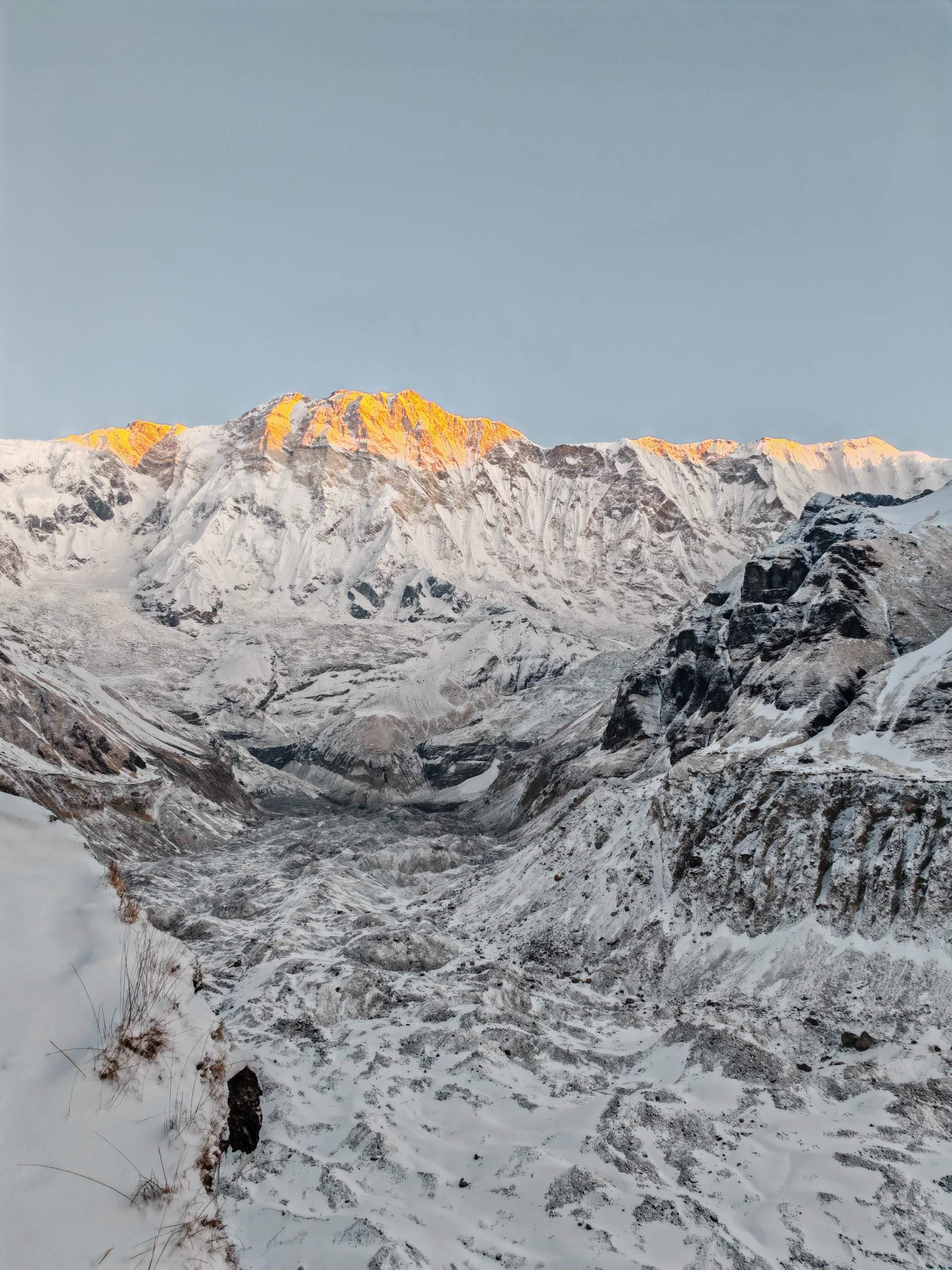
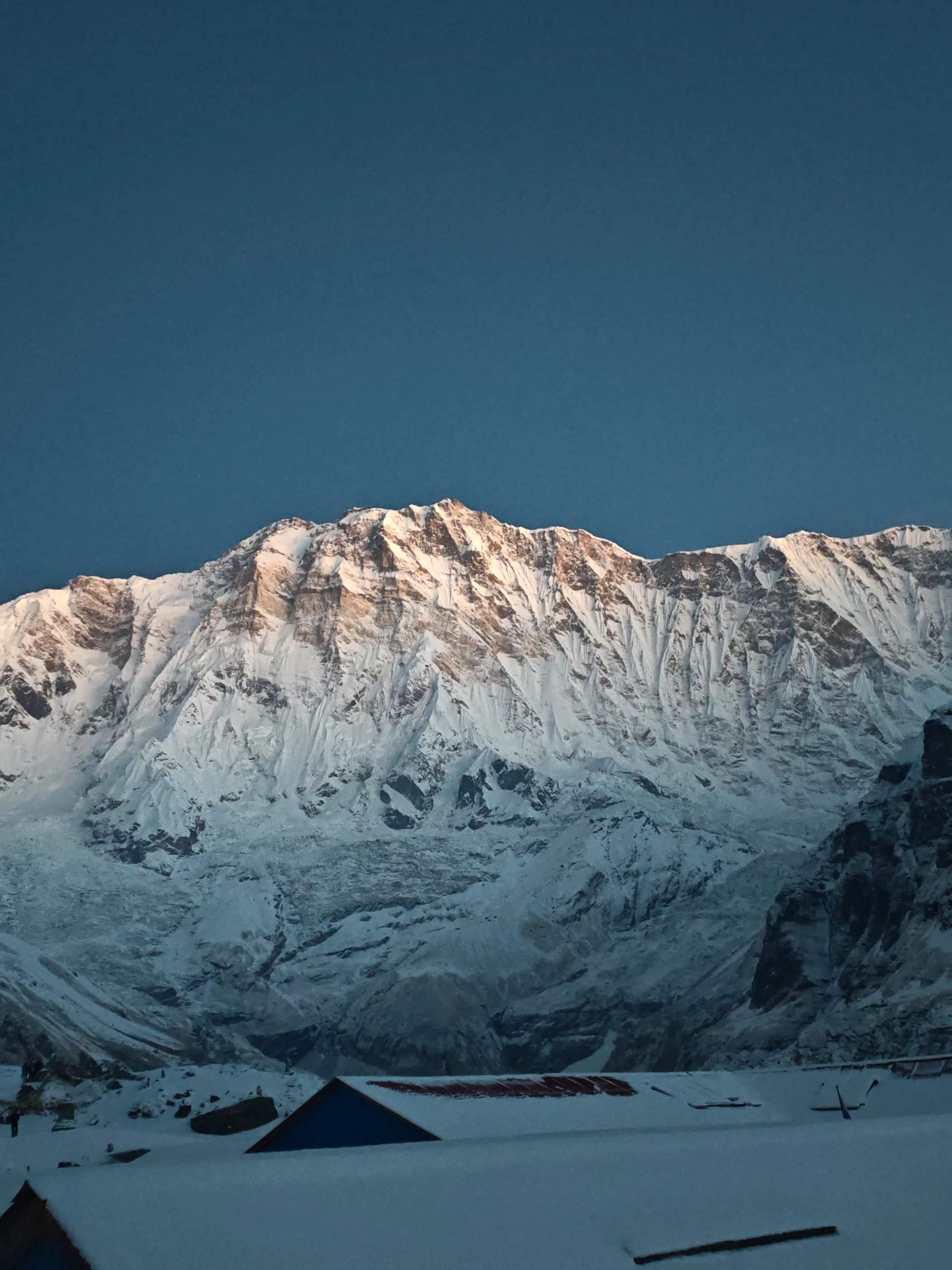
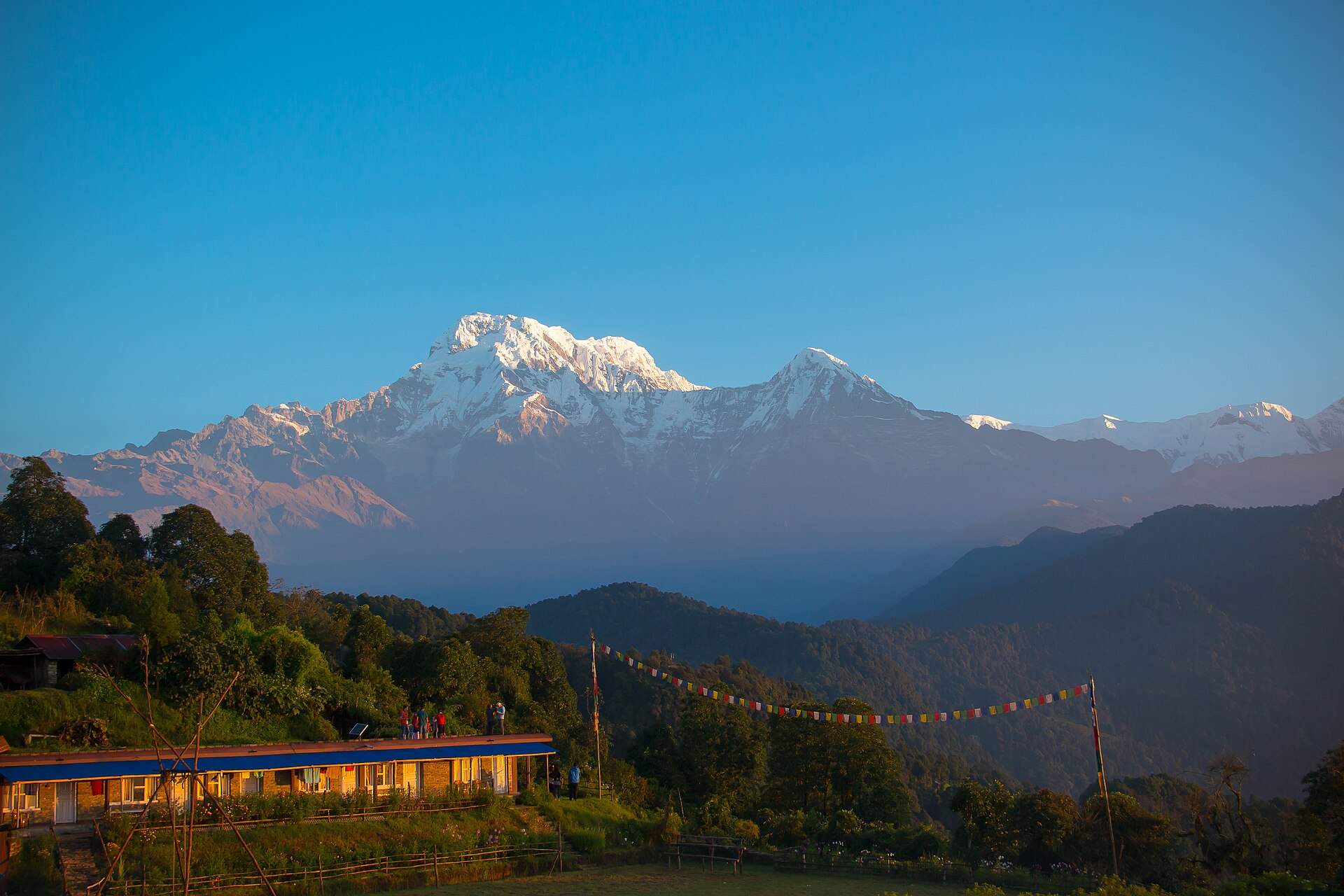
Kori Danda is a long grassy ridge north-east of Sikles, at about 3,800 m, that looks straight across a deep valley at Lamjung Himal (6,983 m) and the south faces of Annapurna II and IV. On a clear morning the view runs west past Annapurna III to Machhapuchhre and east towards Manaslu. Until a few years ago only herders came here. A handful of simple lodges now stand on the ridge, and in autumn it has become a favourite weekend trek for Nepali walkers from Pokhara, while foreign trekkers are still rare. The trek is also sold as the Kori Trek, Kori Himal Trek or Kori Hill Trek; all of them reach the same ridge.
The first day is a drive of three to four hours up the Madi valley to Sikles, one of the largest Gurung villages in Kaski. From there the trail follows the forested valley north to Hugu Goth, the same way as the trek to Kapuche Lake, then turns east and climbs steeply through rhododendron and oak to Nohtha, a herders' clearing at about 3,000 m. A shorter but steep climb the next day brings you onto the ridge at Kori, with the afternoon free for the views and sunset.
After sunrise you come down by a different route, dropping through Tasa to the river at Madkyu Bridge and climbing back to Sikles for the night. It is the longest day of the trek, with about 2,400 m of descent. On the last morning the jeep takes you back to Pokhara.
This is a harder trek than its altitude suggests. Two days climb about 800 to 1,000 m, the night at Kori is about 800 m higher than the night before, and the descent is long and hard on the knees. Lodges above Sikles are basic, and at Nohtha there may only be a tea shop, so the operator carries tents as a backup. If you would also like to see Kapuche Lake, a seventh day can be added from Hugu Goth.
Fa per me?
This trek suits fit walkers with some hill-walking or trekking experience. There are no technical sections, but the days are steep: about 1,000 m of climbing on day three, about 800 m on day four, and seven to eight hours on day five with about 2,400 m of descent and a 550 m climb back to Sikles. The night at Kori is about 800 m higher than the night before, so many people feel the altitude, often as a mild headache; tell your guide about any symptoms. It is not a good first trek for anyone with knee problems. In the two to three months before you travel, take regular hill walks of five to six hours with a light daypack, include long descents and stair sessions, and add cardio such as running or cycling. Trekking poles are strongly recommended.
Profilo altimetrico
Giorno per giorno
Giorno1Drive from Pokhara to Sikles
- 1980 m
- Pranzo, Cena
- Homestay or guesthouse in Sikles
You leave Pokhara at about 8 am by private jeep and drive north-east up the Madi valley. The road is paved to Chipli, then a rough dirt track through Khilang and Parche to Sikles, about three to four hours in all. After lunch you can walk up to Rising Danda above the village, about an hour and a half each way, for a first look at Lamjung Himal and Annapurna II, or simply wander the stone lanes of Sikles. You stay in a family homestay or simple guesthouse.
Giorno2Sikles to Hugu Goth
- 2050 m
- 5–6 h di cammino
- 11 km
- Colazione, Pranzo, Cena
- Lodge at Hugu Goth
The trail leaves the village on stone steps and heads north up the valley below Annapurna II, through oak and rhododendron forest, across streams and suspension bridges and past a waterfall. There are no villages on the way, so lunch is a packed meal or a stop your guide arranges. In the afternoon you reach Hugu Goth, a herders' clearing where a few simple lodges now stand.
Giorno3Hugu Goth to Nohtha
- 3000 m
- 5–6 h di cammino
- 8 km
- Colazione, Pranzo, Cena
- Lodge or tented camp at Nohtha
Today the trail leaves the Kapuche valley and climbs east, steeply and steadily, through rhododendron and oak forest to Naula Kharka and on to Nohtha, a herders' clearing at about 3,000 m. It is a climb of about 1,000 m, so take it slowly and drink often. You sleep in a simple lodge if one is open, or in tents carried for the trek.
Giorno4Nohtha to Kori Danda
- 3800 m
- 3–5 h di cammino
- 5 km
- Colazione, Pranzo, Cena
- Lodge or tented camp at Kori
A shorter but steep climb takes you out of the forest onto open grassland and up to the ridge at Kori, about 3,800 m. Walk slowly: you gain about 800 m today. You arrive by early afternoon, with time to rest before sunset lights Lamjung Himal, Annapurna II and Annapurna IV across the valley. Your guide checks your oxygen level in the evening. The night is spent in one of the small lodges on the ridge, or in tents.
Giorno5Sunrise at Kori, descend via Tasa to Sikles
- 1980 m
- 7–8 h di cammino
- 13 km
- Colazione, Pranzo, Cena
- Homestay or guesthouse in Sikles
Climb the few minutes to the viewpoint before dawn and watch the sun reach Lamjung Himal and the Annapurnas, with Machhapuchhre and Annapurna III to the west. After breakfast the long descent begins: down the open ridge to Tasa, through forest to the river at Madkyu Bridge, then a climb of about two hours back up to Sikles. It is the hardest day of the trek, seven to eight hours with about 2,400 m of descent, so poles help a lot. If the group is slow, the night can be spent at Tasa instead.
Giorno6Drive from Sikles to Pokhara
- 822 m
- Colazione
- Your Pokhara hotel (not included)
After breakfast the jeep takes you back down the Madi valley to your Pokhara hotel, about three to four hours, normally arriving around midday.
Date e disponibilità
Preferite scegliere voi le date? Chiedeteci un viaggio privato.
Scegli una Sua dataCosa è incluso
- Private jeep from your Pokhara hotel to Sikles and from Sikles back to Pokhara
- A licensed, English-speaking trekking guide for the whole trek, with wages, meals, accommodation and insurance covered
- One porter for every two trekkers (carrying up to about 20 kg in total), with wages, meals, accommodation and insurance covered
- Annapurna Conservation Area Project (ACAP) entry permit, and a TIMS card if one is required for your dates
- Two nights in a homestay or lodge in Sikles, one at Hugu Goth, one at Nohtha and one at Kori, normally in shared twin or dorm rooms
- Tents, sleeping mats and a cooking kit, with an extra porter to carry them, whenever a lodge at Nohtha or Kori cannot be confirmed for your dates
- Breakfast, lunch and dinner on the trek, from lunch on day one to breakfast on day six, with tea or coffee at each meal
- Sleeping bag and down jacket on loan for the trek
- A first aid kit and pulse oximeter carried by your guide
- Trek route map
- International flights and travel between Kathmandu and Pokhara
- Nepal visa fees
- Hotel nights and meals in Pokhara before and after the trek
- Travel insurance covering trekking to 4,000 m and helicopter evacuation
- Drinks other than tea or coffee with meals, snacks and bottled or treated water
- Hot showers and battery charging where lodges charge for them
- The optional extra day to Kapuche Lake
- Tips for your guide, porter and driver
- Extra nights or costs caused by landslides on the road, bad weather, illness or leaving the trek early
- Personal trekking equipment and clothing
Permessi inclusi: Area di conservazione dell'Annapurna (ACAP)
Da sapere prima di partire
Altitude on this trek
You sleep at about 2,000 m in Sikles and Hugu Goth, about 3,000 m at Nohtha and about 3,800 m at Kori. The step from Nohtha to Kori is about 800 m, more than the usual advice of 300 to 500 m a night above 3,000 m, and there is nowhere to stop in between. It is a single night at that height followed by a long descent, which keeps the risk low, but walk slowly, drink three to four litres a day and tell your guide about any headache or nausea. Your guide checks your oxygen level at Nohtha and Kori, and if symptoms get worse you descend to Nohtha, about two hours below the ridge.
Lodges, tents and water
Sikles has family homestays and simple guesthouses, and Hugu Goth has a few basic lodges in former herders' shelters. Kori had four small lodges in early 2025, with dorm-style rooms, little power and no reliable water supply. Nohtha may only have a tea shop. When the operator cannot confirm a bed at Nohtha or Kori for your dates, the trek carries tents, mats and a cooking kit with an extra porter, at no extra cost to you. There is no water source between Tasa and Kori, so carry two litres and a way to treat it. Kori is busy with Nepali trekkers at weekends and during the Dashain and Tihar holidays in October and November, so book early.
The road to Sikles
Sikles is a drive of three to four hours from Pokhara by four-wheel-drive jeep. The road is paved as far as Chipli and then rough dirt for about 29 km via Khilang and Parche. Landslides close it after heavy rain, mostly from June to September; a slide at Padukhola closed it on 22 August 2026. There is no road above Sikles, so everything beyond the village is on foot.
Permits and the guide rule
Sikles and Kori lie inside the Annapurna Conservation Area, so every trekker needs an ACAP entry permit: NPR 3,000 for foreign nationals and NPR 1,000 for SAARC nationals, with children under ten free. Bought at a checkpoint on the trail it costs double, so the operator gets it in Pokhara before you start, using a scan of your passport and a passport photo. The Nepal Tourism Board lists treks from Sikles among the Annapurna routes that need a licensed guide and a TIMS card (NPR 2,000, or NPR 1,000 for SAARC nationals); checks on the trail vary, and what you need is confirmed when you book. No restricted area permit is needed. Fees checked November 2026.
Safety and evacuation
Kori is remote: there is no road above Sikles, phone signal is patchy or absent on the ridge, and the realistic way out in an emergency is a helicopter from Pokhara, which your insurance must cover. The descent through Tasa is steep and can be slippery, and herding dogs guard the summer pastures, so keep close to your guide. In winter snow can cover the ridge and the trail above Nohtha. Cloud often hides the view, so there is no guarantee of clear mountains; the best chance is at dawn.
Weather and seasons
Mid-October and November bring the clearest skies and cold nights, with frost on the ridge. March and April are milder, and the rhododendron forest below Nohtha is in flower, though cloud builds by late morning. May is warmer and hazier. From December to February nights at Kori drop well below freezing and snow is likely, so winter departures run only with tents and extra kit. From June to September rain, leeches and landslides make the trek hard work and the ridge is usually in cloud.
Cash and charging
Don't count on an ATM after Pokhara: bring Nepali rupees for drinks, snacks, charging and tips. Sikles has mains electricity; above it power comes from small solar panels, if at all, so bring a power bank.
Cosa mettere nello zaino
Tutto è da portare con sé, tranne gli articoli segnati come “Fornito” o “Noleggio sul posto”.
Abbigliamento
Waterproof and windproof jacket
Down jacketFornito
On loan; nights on the ridge are cold
Fleece mid-layer
Thermal base layers, top and bottom
Trekking shirts and trousers
Quick-drying
Warm hat, sun hat and gloves
Calzature
Broken-in trekking boots with ankle support
The descent through Tasa is long and steep
Sandals or light shoes for the evenings
Trekking socks
Four pairs
Attrezzatura
Sleeping bagFornito
On loan; a liner adds warmth
Daypack of 25 to 35 litres with rain cover
Trekking polesNoleggio sul posto
Strongly recommended; easy to hire in Pokhara
Head torch
For sunrise on the ridge
Two one-litre water bottles
No water between Tasa and Kori
Sunglasses
Power bank and charging cables
Little or no power above Sikles
Salute e igiene
Water filter, purification tablets or UV pen
Sun cream and lip balm
Personal first aid kit, blister plasters and medication
Ask your doctor about altitude medication
Documenti
Passport and two passport photos
Needed for the ACAP permit
Travel insurance details
Must cover helicopter evacuation
Altro
Nepali rupees in cash
No ATMs after Pokhara
Snacks such as nuts and energy bars
Little to buy above Sikles
Domande su questo viaggio
How many days is the Kori Danda Trek?
Six days from Pokhara: a drive to Sikles, two days climbing via Hugu Goth and Nohtha, a night on the ridge at Kori, a long descent back to Sikles and the drive home. Nepali groups often do it in two or three days, but those itineraries jump more than 1,000 m in a night and leave no time to adjust. A seventh day can be added for Kapuche Lake or a second night on the ridge.
How hard is it?
We grade it challenging. The altitude is moderate, but the climbs are steep, the night at Kori is about 800 m above the night before, and day five has seven to eight hours of walking with about 2,400 m of descent. If you have done a trek like Poon Hill or Mardi Himal and enjoyed it, this is a good next step.
How high is Kori Danda?
The lodges sit at about 3,800 m and the viewpoint just above them at about 3,850 m. Some operators quote 4,115 m for Thulakhe, a higher point further along the ridge, which this itinerary does not visit.
Where do you sleep?
In a homestay or simple guesthouse in Sikles, in basic lodges at Hugu Goth and Kori, and at Nohtha in a lodge if one is open, or otherwise in tents carried for the trek. Rooms are shared and simple, with shared toilets.
Can I combine Kori with Kapuche Lake?
Yes. Both treks pass through Hugu Goth. Adding a day there lets you walk to Kapuche Glacier Lake and back before climbing to Nohtha, which also helps you acclimatise. Ask for the seven-day version when you enquire.
Do I need a permit and a guide?
You need an ACAP permit (NPR 3,000 for foreign nationals, NPR 1,000 for SAARC nationals), which is included. The Nepal Tourism Board lists treks from Sikles among the routes that need a licensed guide and a TIMS card; a licensed guide is included either way, and the operator arranges a TIMS card if it is required.
When is the best time to go?
Mid-October to November for the clearest views, and March to April for rhododendrons in flower. Winter is possible with tents and extra warm kit, but snow is likely on the ridge. The monsoon, June to September, is not recommended.
How is it different from the Kapuche Lake Trek?
Kapuche Lake is a four-day forest walk to a glacier lake at about 2,450 to 2,550 m. Kori climbs much higher, to a ridge at about 3,800 m with wide mountain views, and is two days longer and considerably harder. Both start from Sikles.