Ir para o conteúdo

Things to do in Pokhara

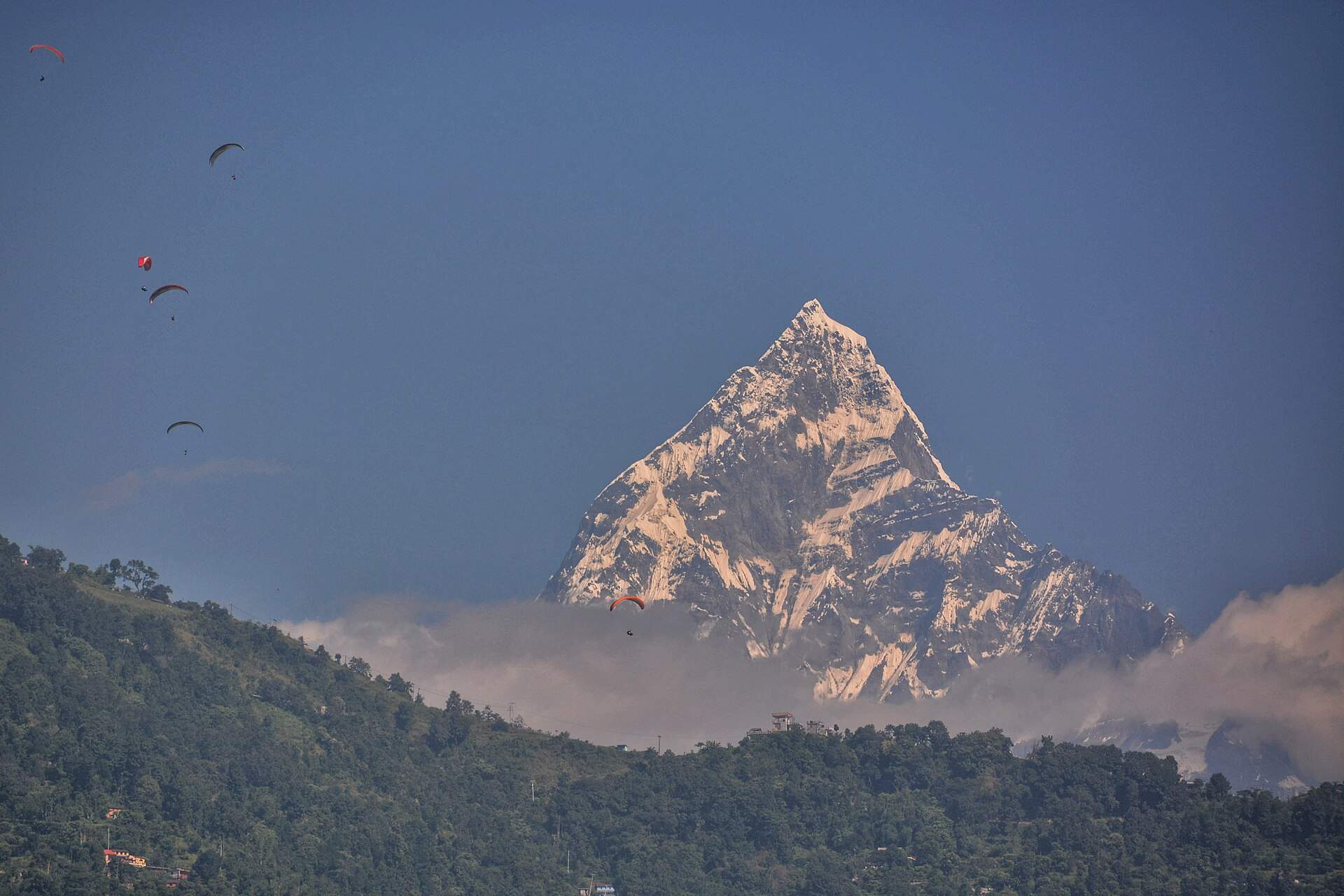
Pokhara sits on Phewa Lake at about 800 m, with Machhapuchhre and the Annapurnas filling the northern skyline. It is where most Annapurna treks start and finish, and the place in Nepal for paragliding, lake days and short hikes. Here is what to do, what it costs in 2026 and how to fit it around a trek.

Pokhara at a glance

Where
Kaski district, about 200 km west of Kathmandu
Getting there
About 25 minutes by air, or 7–8 hours by road
How long
2–3 days, plus a day either side of a trek
Best months
October–November and March–April
Altitude
About 800 m at the lake; Sarangkot about 1,600 m
Trek gateway
Poon Hill, Mardi Himal, Annapurna Base Camp, Mustang

Phewa Lake, Tal Barahi and Lakeside

Phewa Lake is the centre of Pokhara for visitors. The hotel and restaurant district along its eastern shore is called Lakeside (Baidam), and on a clear morning the reflection of Machhapuchhre (6,993 m) lies across the water. Walking the shore path is free, and it is the easiest way to spend a first afternoon after a long drive.

The small two-storey temple on the island is Tal Barahi, dedicated to the goddess Barahi. Rowing boats leave from the ghats near the temple car park. You can join a shared boat for a few minutes' crossing or hire your own for an hour. Boat prices are set at the jetty and vary, so agree the price and the time before you set off.

Kayaks and stand-up paddleboards are hired along the shore. Since a District Administration Office order of 25 June 2026, everyone on the water must wear a life jacket, and all water activities stop at 6 pm. Only a few of the paddleboard operators held local permits in 2026, so hire from an established boat counter rather than a stall on the beach.

For a quieter evening, walk south to Damside, where the lake drains out over the dam, or take a taxi east to Begnas and Rupa lakes, which have a few lodges and far fewer boats.

Sarangkot sunrise and the World Peace Pagoda

Sarangkot is the ridge directly north-west of the lake, at about 1,600 m. From the top you see Dhaulagiri to the west, the Annapurna range and Machhapuchhre straight ahead, and the lake and city below. Most people drive up before dawn for sunrise, about 40 minutes from Lakeside, and walk the last stretch of steps to the viewing tower. The municipality charges a small entry fee. October to December gives the clearest dawns; in spring a haze often sits over the valley by mid-morning.

You can also walk up from Lakeside in two to three hours on village paths, or stay overnight in one of the Sarangkot lodges and catch sunrise without the early drive.

On the hill across the lake stands the World Peace Pagoda (Shanti Stupa), a white Buddhist stupa built by the Japanese order Nipponzan Myohoji and consecrated in 1999. It sits at about 1,100 m on Anadu Hill and is free to visit from 6 am to 6 pm. The usual way up is a boat across the lake and a climb of about an hour through forest. Coming back, you can walk down the far side to Damside or take a taxi from the road below the stupa. Remove your shoes on the stupa terrace and walk round it clockwise.

Caves, waterfalls and the Mountain Museum

Three sights south of Lakeside fit into half a day by taxi.

  • Davis Falls (Patale Chhango): the Pardi Khola drops into a narrow gorge and disappears underground. It is at its most powerful from July to September and much quieter in spring.
  • Gupteshwor Mahadev Cave, across the road: a Hindu cave shrine to Shiva, with steps leading down past the shrine to a chamber behind the falls. It is wet and slippery, so wear shoes with grip.
  • International Mountain Museum: run by the Nepal Mountaineering Association, with displays on the 8,000 m peaks, early expeditions and the mountain peoples of Nepal. Allow an hour or two. It is a good rainy-day stop before a trek.

In the north of the city, the Old Bazaar keeps some of Pokhara's Newar trading houses, and the hilltop Bindhyabasini Temple is busiest with local worshippers in the early morning.

Each of these sights charges a small entry fee, roughly NPR 100–500 for foreign visitors depending on the site. Fees are paid at the gate in cash.

Adventure: paragliding, zipline, ultralight and rafting

Pokhara has more air sports than anywhere else in Nepal. Every one of them depends on the weather, so leave a spare day and book the activity for your first free day in town rather than the last.

  • Paragliding: tandem flights launch from the Sarangkot ridge and land beside Phewa Lake. Civil aviation rules allow flying between 11 am and 4:30 pm, so there are no sunrise flights. A 20–30 minute tandem flight costs about NPR 8,000–12,000 in 2026, depending on length and whether photos are included.
  • ZipFlyer: a zipline of about 1.8 km from Sarangkot down to Hemja, dropping about 600 m. Foreign riders paid NPR 8,850 in 2026, including the transfer from Lakeside. Minimum age 13.
  • Ultralight flights: two-seat microlights fly from Pokhara's domestic airport from September to June, up towards Machhapuchhre. Fifteen minutes costs about USD 150 and an hour about USD 330.
  • Hot-air balloon: one operator flies at sunrise from a launch field a few kilometres from Lakeside, for about USD 150. Flights pause during the monsoon.
  • Rafting: the Upper Seti runs as a half day from Pokhara, and the Lower Seti as a two-day class II–III trip. The Trishuli, the usual rafting river on the road from Kathmandu, is closed for the rest of 2026 after the August flood.
  • Bungee: a tower bungee at Hemja, about 20 minutes from Lakeside, and the 228 m bridge-and-cliff jump at Kushma, about 62 km away on the Beni road.

Standard travel insurance often excludes paragliding, bungee and microlight flights. Check your policy wording, or add adventure cover, before you book.

Short hikes from Pokhara

If you have a day or two and no time for a full trek, the hills round Pokhara give you mountain views without altitude.

  • Sarangkot on foot: two to three hours up from Lakeside, taxi back down.
  • World Peace Pagoda to Damside: boat across, climb to the stupa, walk down the other side. Half a day.
  • Australian Camp and Dhampus: a ridge at 2,060 m facing Machhapuchhre and Annapurna South, an hour's drive from Pokhara. Our Australian Camp and Dhampus trek does it in two days with one night in a lodge.
  • Panchase: forested hills south-west of the lake, protected since 2012, walked in one to three days.

For routes of three to five days, read our guide to short treks from Pokhara.

Evenings and food in Pokhara

Lakeside is where Pokhara spends its evenings. Restaurants line the main road and the lake shore, from dal bhat and momos to international menus, and several bars have live music most nights in the main seasons. Walk the shore path at sunset, when Machhapuchhre often clears just before dark.

The night is short: water activities on the lake stop at 6 pm, and most restaurants close by about 11 pm. If you are starting a trek the next morning, eat early, pack the night before and ask your hotel to keep your spare bags while you are on the trail. Most Lakeside hotels do this for guests.

Getting to Pokhara in 2026

By air. Flights from Kathmandu take about 25 minutes and land at Pokhara International Airport, which opened on 1 January 2023. Sit on the right-hand side flying west for the mountains. Since late September 2026, flydubai has run a daily Dubai–Pokhara flight, so you can now fly into Pokhara without going through Kathmandu.

By road. Pokhara is about 200 km from Kathmandu on the Prithvi Highway, typically seven to eight hours by tourist bus. The road had a hard year in 2026: it was cut at Krishnabhir for 18 days after the August flood and blocked several times by landslides near Ghoptebhir in early November. Several stretches are still single-lane while the highway is widened. Plan the drive with a spare day before an international flight home.

Two- and three-day plans, and Pokhara as a trek base

Two days

  • Day 1: sunrise at Sarangkot; paragliding or the ZipFlyer late morning; boat to Tal Barahi and an evening walk along Lakeside.
  • Day 2: boat across the lake and climb to the World Peace Pagoda; afternoon at Davis Falls, Gupteshwor Cave and the Mountain Museum.

Three days

Add a day at Begnas and Rupa lakes, a half-day raft on the Upper Seti or an ultralight flight, and keep the third day free in case the weather cancels a flight.

Before and after a trek

Pokhara is the start and finish for most of our Annapurna treks. The trailheads at Nayapul, Kande and Phedi are a short drive away, so you can land in the morning and be walking by lunchtime. We suggest one night in Pokhara before a trek to buy last items and store spare luggage, and one or two nights after, which is when most people go paragliding. See all our Annapurna region treks.

Treks that start in Pokhara

Each of these starts and ends in Pokhara, so you can add a day of paragliding or lake time before or after.

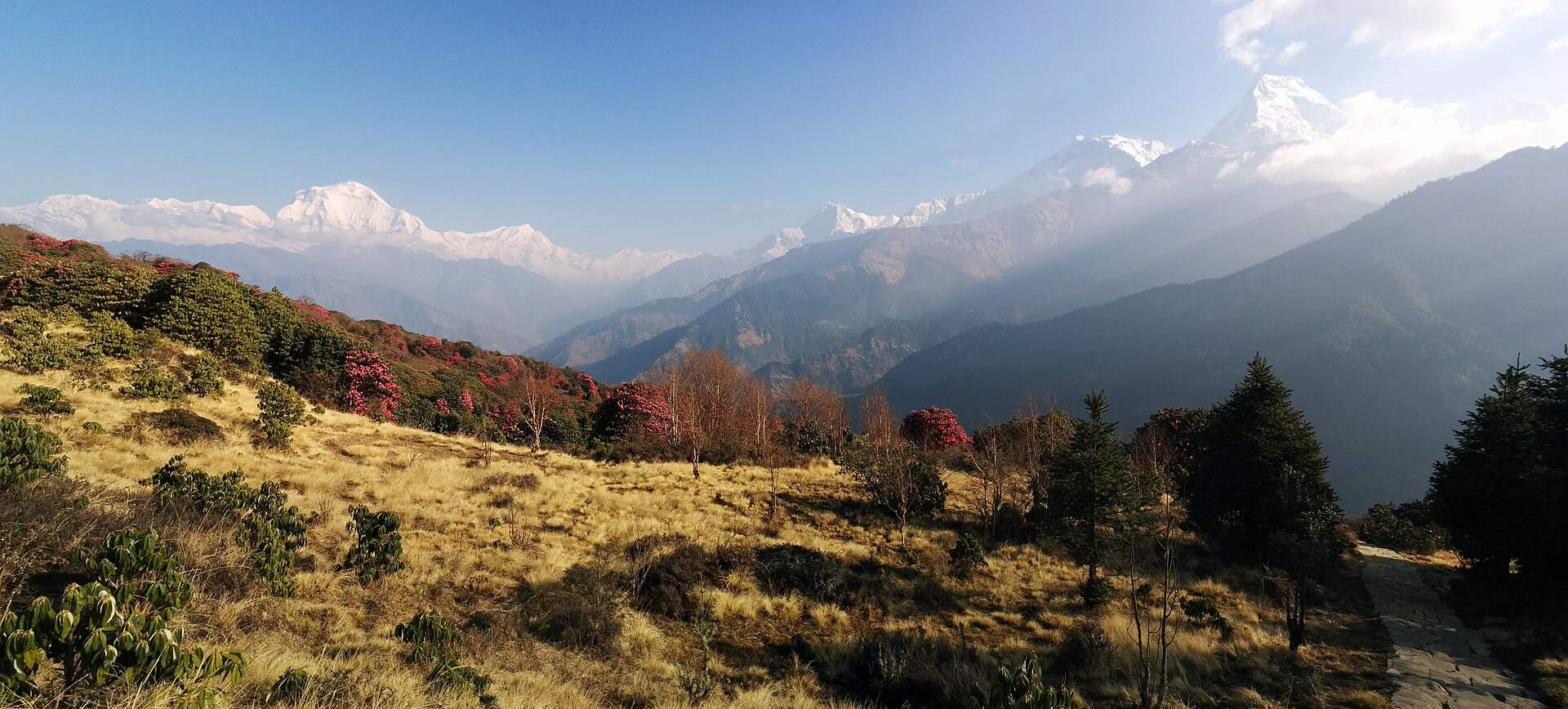
Dhaulagiri and the Annapurna range from Poon Hill, with rhododendrons in flower
Duração
4 dias
Nível
Fácil(1 de 5)
Ponto mais alto
3.210 m

Um circuito de quatro dias saindo de Pokhara, por Ulleri e Ghorepani, para ver o nascer do sol sobre o Dhaulagiri e os Annapurnas do alto do Poon Hill (3.210 m), voltando por florestas de rododendros até Tadapani e a aldeia gurung de Ghandruk. Curto, de baixa altitude e cheio de vistas de montanha.

Próximas partidas

  • 1 de dez. de 2026500 lugares disponíveis
  • 2 de dez. de 2026500 lugares disponíveis
  • 3 de dez. de 2026500 lugares disponíveis

+57 outras datas

Desde

US$ 410por pessoa

Ver viagem
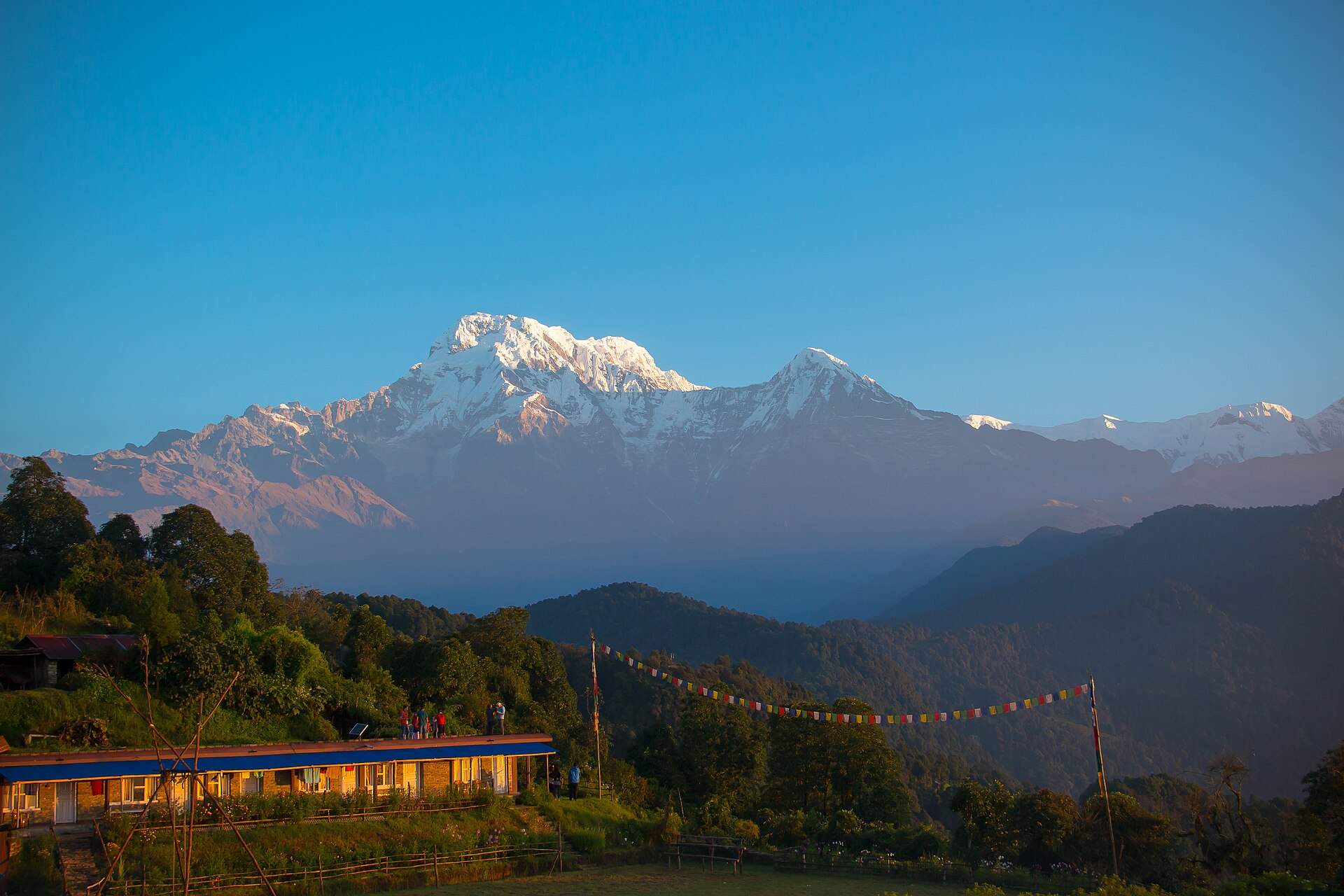
Lodge at Australian Camp below Annapurna South and Hiunchuli
Duração
2 dias
Nível
Fácil(1 de 5)
Ponto mais alto
2.060 m

Uma caminhada de dois dias a partir de Pokhara até Australian Camp (2.060 m), para ver o pôr do sol e o nascer do sol sobre o Machhapuchhre e os Annapurnas, com volta por Pothana e pela vila gurung de Dhampus até Phedi. O jeito mais rápido de dormir aos pés das grandes montanhas saindo de Pokhara.

Próximas partidas

  • 1 de dez. de 2026500 lugares disponíveis
  • 2 de dez. de 2026500 lugares disponíveis
  • 3 de dez. de 2026500 lugares disponíveis

+57 outras datas

Desde

US$ 175por pessoa

Ver viagem
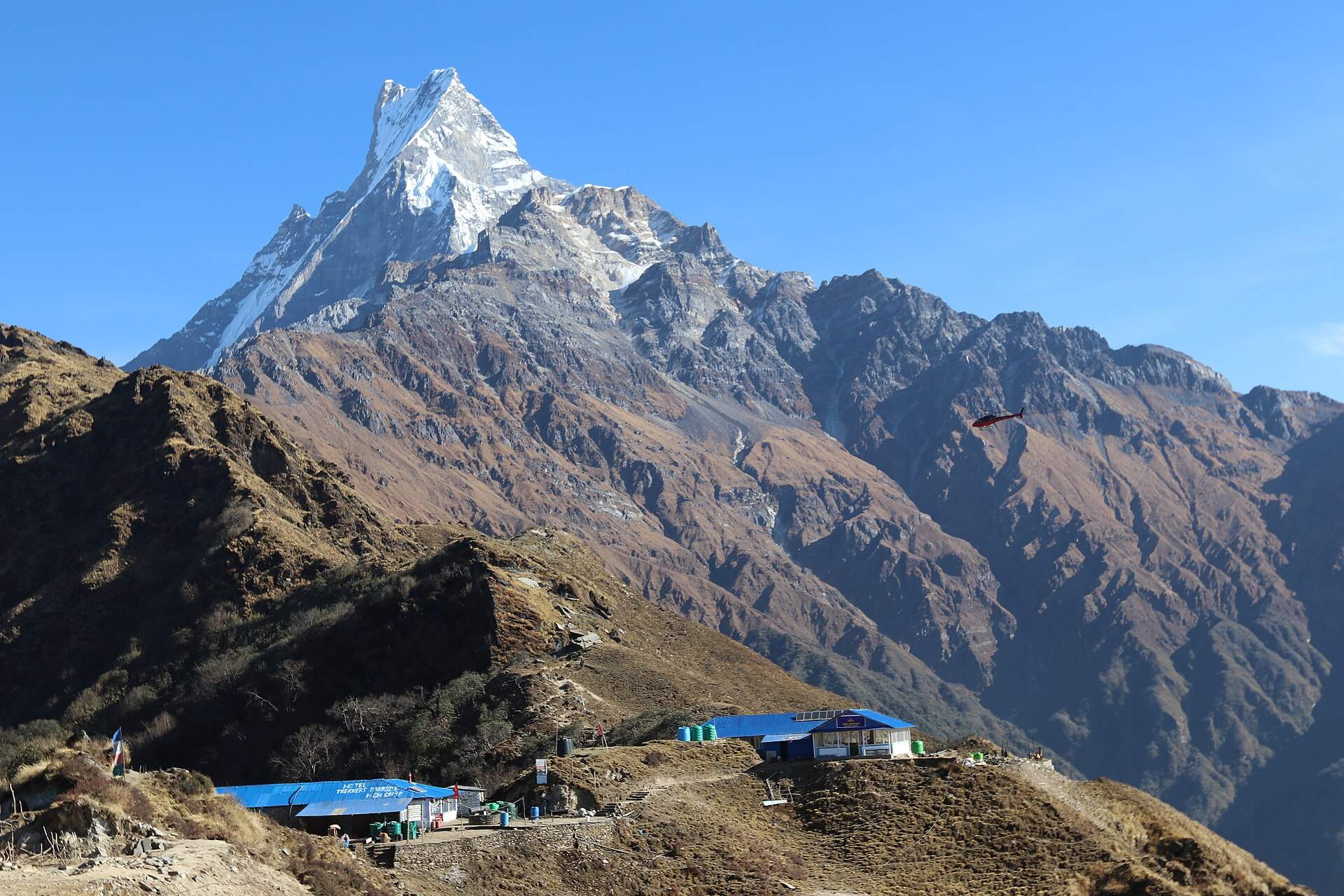
The lodges at High Camp with Machhapuchhre behind
Duração
5 dias
Nível
Moderado(2 de 5)
Ponto mais alto
4.200 m

Cinco dias a partir de Pokhara pela crista florestada que segue para o norte em direção ao Machhapuchhre, com pernoites em Forest Camp, Low Camp e High Camp (3.580 m) antes de uma subida ao amanhecer até o mirante Upper View Point do Mardi Himal, a cerca de 4.200 m. Uma rota mais tranquila, com vistas de perto do Machhapuchhre e do Annapurna Sul, descendo até Siding para a volta de carro.

Desde

US$ 475por pessoa

Ver viagem
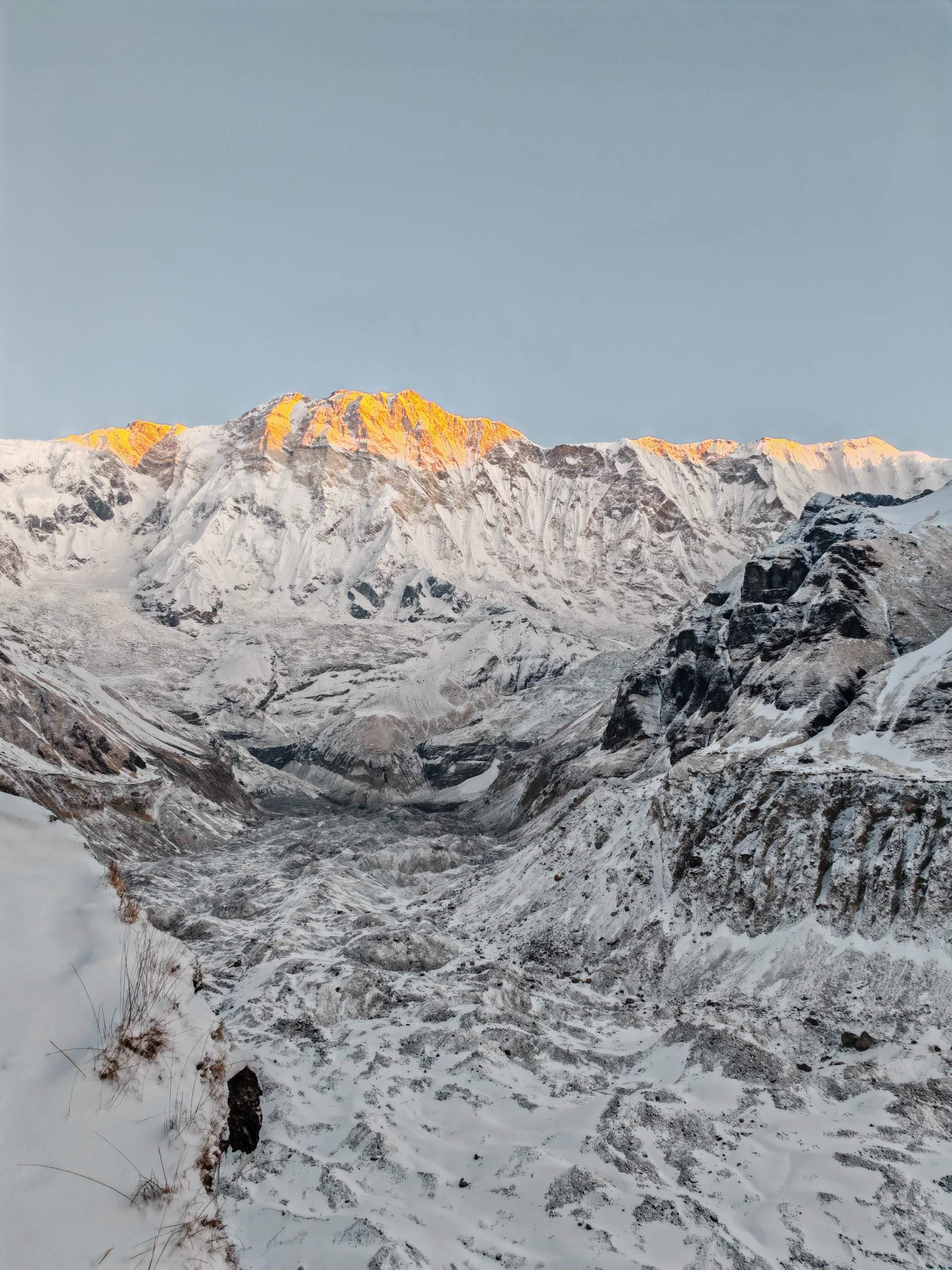
Annapurna I in golden sunrise above the glacier at Annapurna Base Camp
Duração
10 dias
Nível
Moderado(2 de 5)
Ponto mais alto
4.130 m

Dez dias de Pokhara ao Acampamento-Base do Annapurna (4.130 m) e de volta, começando com o nascer do sol em Poon Hill, acima de Ghorepani, e cruzando até Chhomrong antes de seguir o desfiladeiro do Modi Khola até o Santuário do Annapurna. Dois dos melhores mirantes da região em um só trekking, terminando nas fontes termais de Jhinu.

Desde

US$ 990por pessoa

Ver viagem

Pokhara questions

How many days in Pokhara are enough?

Two days covers the main sights: Sarangkot at sunrise, the lake and Tal Barahi, the World Peace Pagoda, Davis Falls and the Mountain Museum. Add a third day for paragliding or rafting with a spare day for weather. If you are trekking, add one night before and one or two after.

What is Pokhara famous for?

Phewa Lake with Machhapuchhre reflected in it, sunrise over the Annapurnas from Sarangkot, tandem paragliding, and being the starting point for the Annapurna treks, including Poon Hill and Annapurna Base Camp.

Is Pokhara better than Kathmandu?

They are different. Kathmandu has the temples, palaces and old Newar towns of the valley. Pokhara is calmer, with the lake, close mountain views and adventure sports. Most visitors spend two or three days in each, and Pokhara is the better place to rest after a trek.

What can you do in Pokhara at night?

Eat and listen to live music in Lakeside, walk the lake shore at sunset, or stay up on Sarangkot for the night view of the city. Water activities on Phewa Lake stop at 6 pm, and most restaurants close by about 11 pm.

Does it snow in Pokhara?

No. The city is at about 800 m and does not get snow. In winter the nights drop to a few degrees above freezing and the mornings are often foggy, but the peaks to the north are white all year.

When is the best time to visit Pokhara?

October and November for the clearest mountain views, and March and April for warm days and rhododendrons in the hills. December to February is cold in the mornings but often clear. June to September is the monsoon, with heavy rain and the mountains usually in cloud.

Can I fly straight into Pokhara?

Yes. Domestic flights from Kathmandu take about 25 minutes, and since September 2026 flydubai flies daily between Dubai and Pokhara International Airport.

Planning Pokhara around a trek?

Tell us your dates and which trek you have in mind. We will build the Pokhara days around it, including paragliding or rafting, and send you a written quote.

WhatsApp +9779769211118