Poon Hill Trek Guide: Itinerary, Ulleri Steps, Sunrise and Permits
The Poon Hill trek is a four-day loop from Pokhara to a 3,210 m viewpoint for sunrise over Dhaulagiri and the Annapurnas. Our guide covers the route day by day, the Ulleri steps, sunrise times, permits and fees checked in November 2026, the new jeep roads, the best months and what it costs.
22 min read
On this page
- What is the Poon Hill trek like?
- How many days do you need for Poon Hill?
- What is the Poon Hill itinerary day by day?
- What can you see from Poon Hill at sunrise?
- How do you get to the start of the Poon Hill trek?
- Which permits do you need for Poon Hill?
- How hard is the Poon Hill trek?
- When is the best time to trek to Poon Hill?
- What are the teahouses like on Poon Hill?
- What should you pack for Poon Hill?
- How much does the Poon Hill trek cost?
- What would we warn a friend about?
- What are the quieter alternatives to Poon Hill?
- Our Ghorepani Poon Hill trek from Pokhara
The Poon Hill trek is a four-day loop from Pokhara that climbs to a 3,210 m viewpoint above Ghorepani for sunrise over Dhaulagiri, Annapurna South and Machhapuchhre. It is graded easy, the highest night is 2,874 m, and the only permit is the Annapurna Conservation Area entry. The hard part is the first day: thousands of stone steps up to Ulleri. Our Ghorepani Poon Hill trek walks the classic route and comes back a different way, through Tadapani and Ghandruk.
We arrange this trek from Pokhara, and it's the one we suggest for a first trek in Nepal, for families and for anyone with only a few days. The distances here are measured on our own route map, the sunrise times are worked out for the summit, and the permit and gate fees are as they stood in November 2026.
- Pokhara to Pokhara
- 4 days
- Poon Hill
- 3,210 m
- Highest night, Ghorepani
- 2,874 m
- Walking in total
- About 35 km
- Grade
- Easy
- ACAP plus Poon Hill ticket
- NPR 3,150
What is the Poon Hill trek like?
It is a short, steep, village-to-village walk through Magar and Gurung country and rhododendron forest, built around one sunrise. You climb from the Bhurungdi Khola valley to the ridge at Ghorepani, wake in the dark for Poon Hill, then follow the forested ridge east and drop to Ghandruk. The whole route stays inside the Annapurna Conservation Area.
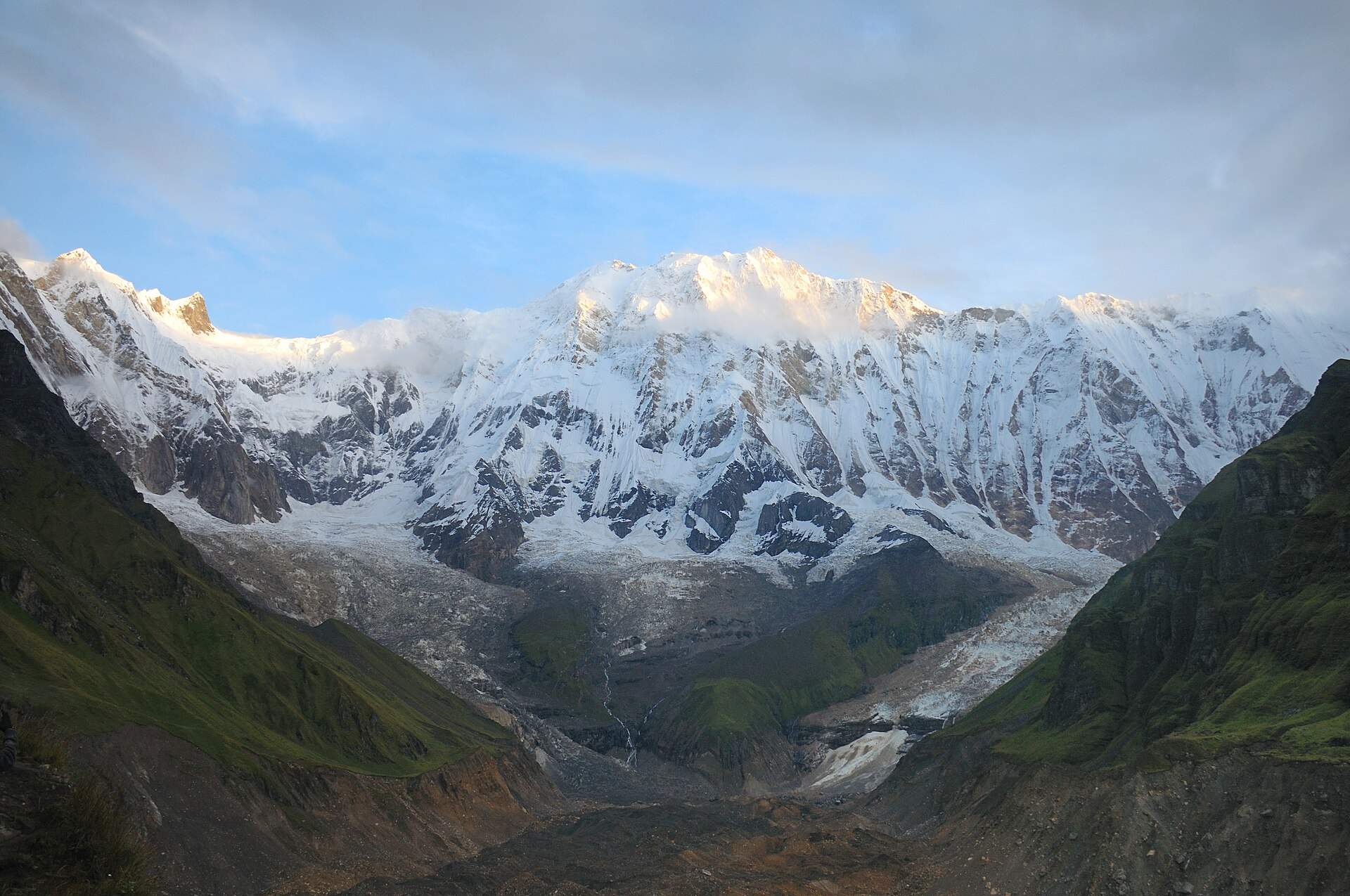
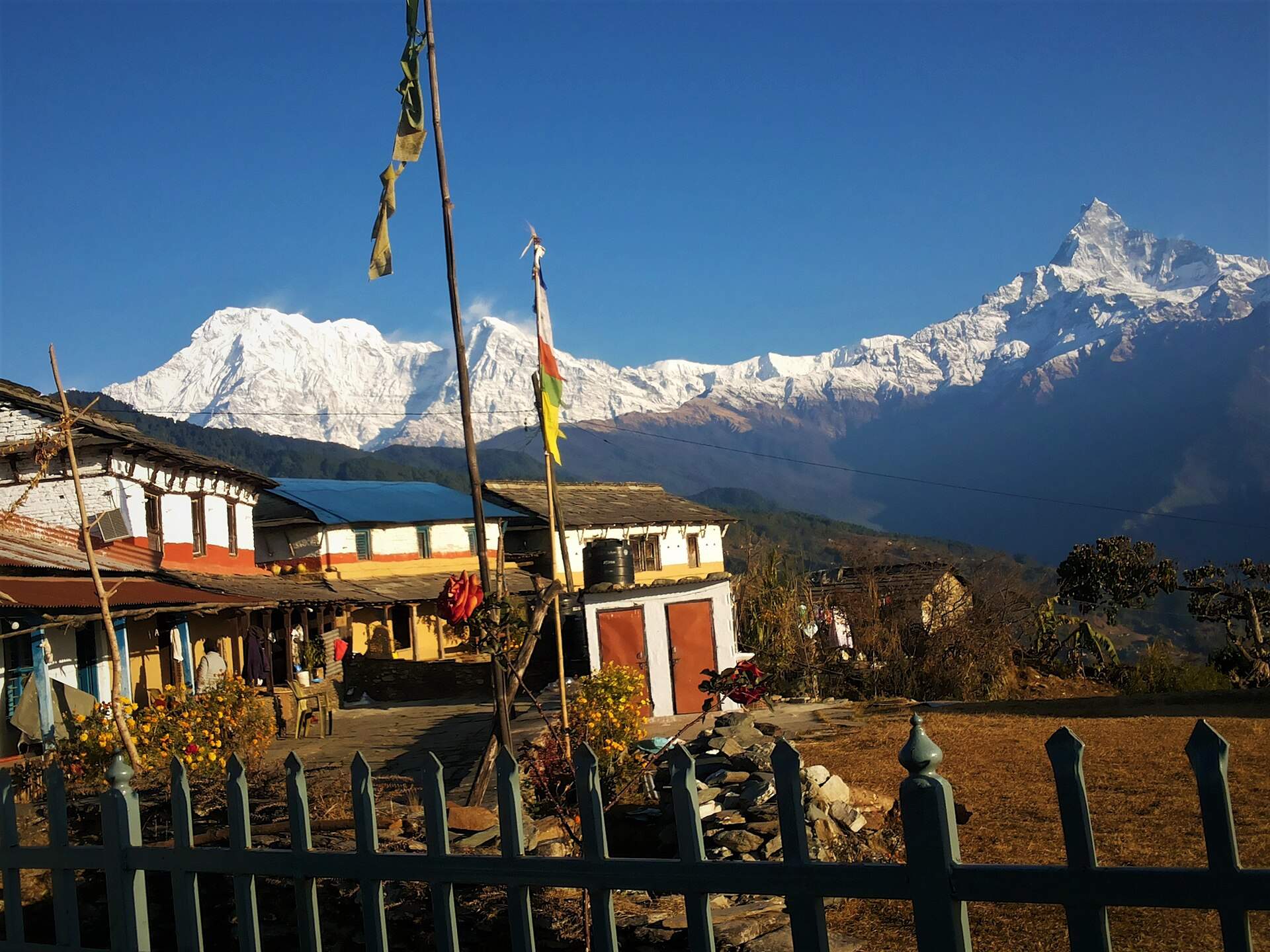
The trek is often called the Ghorepani Poon Hill trek, after the village of lodges where you sleep below the viewpoint. Poon Hill itself is a grassy summit with a viewing tower, about 45 minutes above Ghorepani. From the top you look north-west across the Kali Gandaki gorge to Dhaulagiri and north-east to Annapurna South, with Machhapuchhre to the east and a long line of peaks between.
Poon Hill trek at a glance | Our 4-day loop |
|---|---|
Start and finish | Pokhara (drive to Nayapul, back from Ghandruk) |
Walking distance | About 35 km over 4 days |
Walking per day | 5–6 h, 4–5 h, 6–7 h, 2–3 h |
Highest point | Poon Hill, 3,210 m |
Highest night | Ghorepani, 2,874 m |
Grade | Easy, with a hard first day |
Overnight stops | Ulleri, Ghorepani, Tadapani |
Permits | ACAP entry permit; Poon Hill ticket |
Guide | Licensed guide required for foreign trekkers |
Best months | March, April, October, November, December |
Insurance | Helicopter evacuation to at least 3,500 m |
Route map: Ghorepani Poon Hill trek
View trip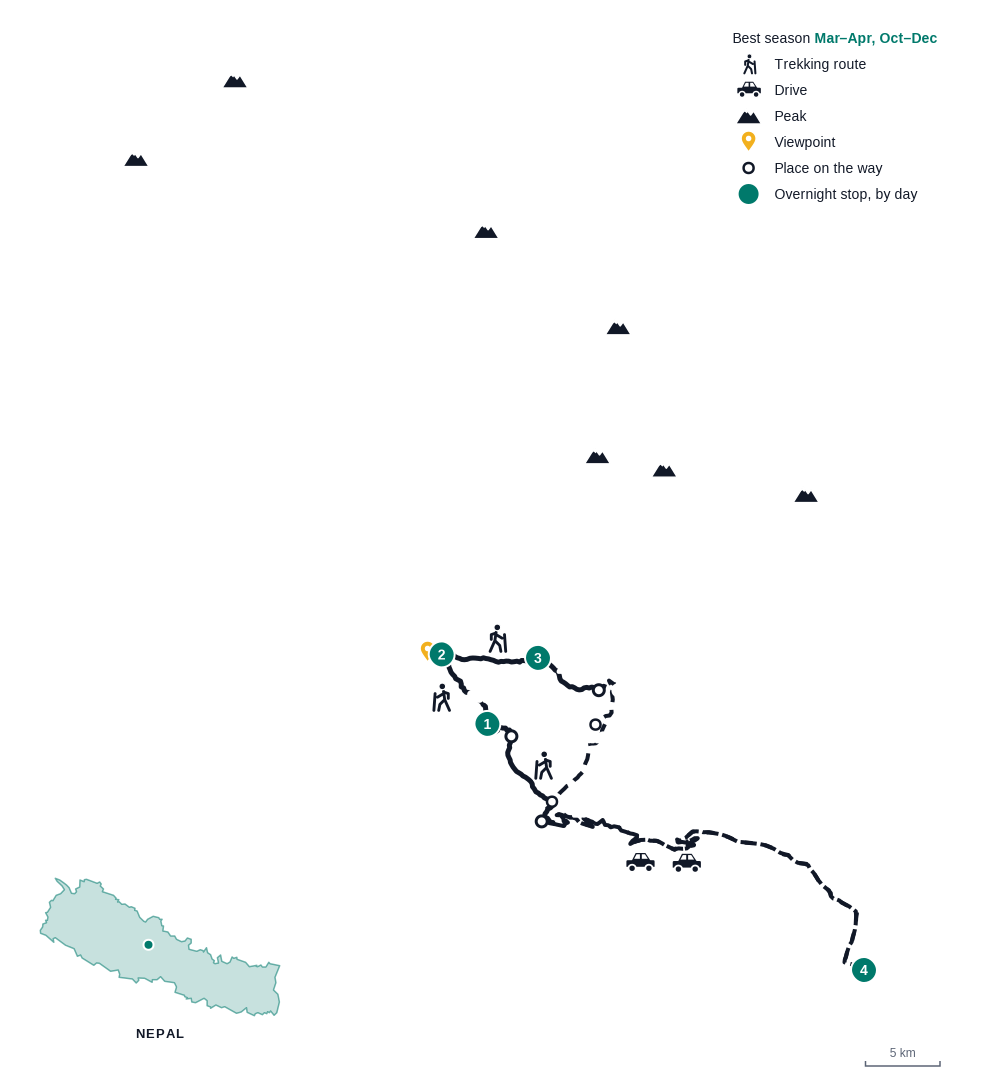
The map shows our route: the road from Pokhara to Nayapul, the trail up the Bhurungdi Khola to Ulleri and Ghorepani, the ridge east to Tadapani and the descent to Ghandruk, where the road picks us up again. The distances in this guide are measured along these route lines, so read them as close estimates rather than surveyed figures.
How many days do you need for Poon Hill?
Four days is the right length for most people: three nights in Ulleri, Ghorepani and Tadapani, with no day longer than seven hours. Three days works if you drive part of the climb and walk fast. Five days suits families, older walkers and anyone who wants afternoons free in the villages.
Version | Days from Pokhara | How it works | Who it suits |
|---|---|---|---|
Short loop | 3 | Jeep to Ulleri or beyond, walk to Ghorepani, Poon Hill and on to Tadapani, then down to Ghandruk and drive back | Fit walkers short of time; you lose the Ulleri climb and some of the villages |
Classic loop (ours) | 4 | Nayapul, Ulleri, Ghorepani, Poon Hill, Tadapani, Ghandruk | Most first-time trekkers |
Relaxed loop | 5 | As the classic loop, with an extra night at Ghorepani or Ghandruk | Families with children, older walkers |
Via Mohare Danda | 5 | Galeshwor, Banskharka, Nangi, Mohare Danda (3,300 m), then Ghorepani and Poon Hill | Quieter ridge before the busy part |
Via Khopra Danda | 8 | Ghandruk, Tadapani, Dobato, Khopra Danda (3,660 m), Ghorepani and Poon Hill | Walkers who want height and fewer people |
With Annapurna Base Camp | 10 | The Poon Hill loop to Tadapani, then Chhomrong and the Annapurna Sanctuary to 4,130 m | A first big trek that starts gently |
The Mohare Danda, Khopra Danda and Annapurna Base Camp treks all include the Poon Hill sunrise, so you do not have to choose between Poon Hill and something longer. Our guide to short treks from Pokhara compares the one- to five-day options.
Which way round should you walk the loop?
Walk it the way we do, up through Ulleri first and back through Ghandruk. You climb the Ulleri steps on fresh legs on day one, reach Ghorepani on an easy second day, and finish with a short downhill morning before the drive.
Going the other way, from Ghandruk to Tadapani and Ghorepani, spreads the climbing more evenly, but it puts the long Ulleri staircase at the end as a descent of over 1,000 m to Nayapul. That is hard on knees, and steps are harder to walk down than up. The Ghandruk-first direction is worth it if you want to see Ghandruk on a clear first morning, or if Ghorepani is fully booked on the night you need.
What is the Poon Hill itinerary day by day?
Day one is the steep day, day two is short, day three is the long one with the sunrise, and day four is a downhill walk and a drive. The table gives our walking times and the distances measured on our route; the itinerary below it has the full detail for each day.
Day | Route | Distance | Walking | Overnight |
|---|---|---|---|---|
1 | Drive Pokhara to Nayapul (1.5 h), walk via Birethanti and Tikhedhunga to Ulleri | About 10.5 km | 5–6 h | Ulleri, 2,070 m |
2 | Ulleri to Ghorepani via Banthanti and Nangethanti | About 7 km | 4–5 h | Ghorepani, 2,874 m |
3 | Poon Hill (3,210 m) at dawn, then the ridge via Deurali to Tadapani | About 11.5 km | 6–7 h | Tadapani, 2,680 m |
4 | Tadapani to Ghandruk, drive to Pokhara (about 3 h) | About 6 km | 2–3 h | Pokhara |
Day 1: Nayapul to Ulleri
This is the hardest day of the trek, and most of the effort comes in the last two hours. We drive about 43 km from Pokhara to Nayapul, cross the bridge to Birethanti (1,025 m), where your guide shows the ACAP permit at the checkpoint, and follow the Bhurungdi Khola upstream past farms and small waterfalls to Tikhedhunga.
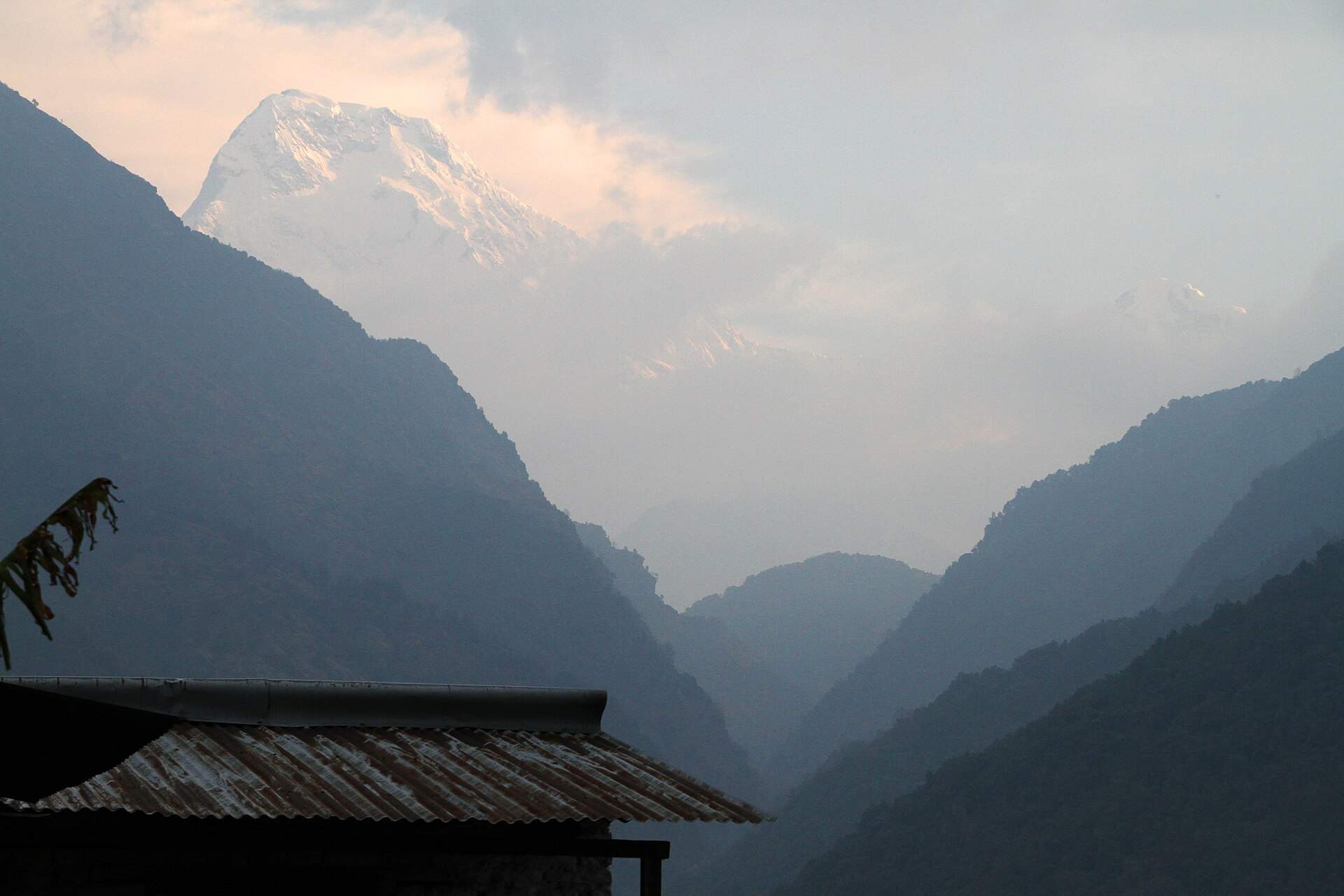
Above Tikhedhunga the trail crosses the river and turns into a stone staircase. It climbs over 500 m to the Magar village of Ulleri (2,070 m) on thousands of steps; there are over 3,000 of them, though nobody has made an official count. Take it slowly, stop often and drink. From the top of Ulleri you get the first view of Annapurna South.
Day 2: Ulleri to Ghorepani
A shorter day with a steady climb of about 800 m, mostly in forest. The gradient eases above Ulleri. The trail passes Banthanti and Nangethanti and enters oak and rhododendron forest, which turns red and pink in March and April.
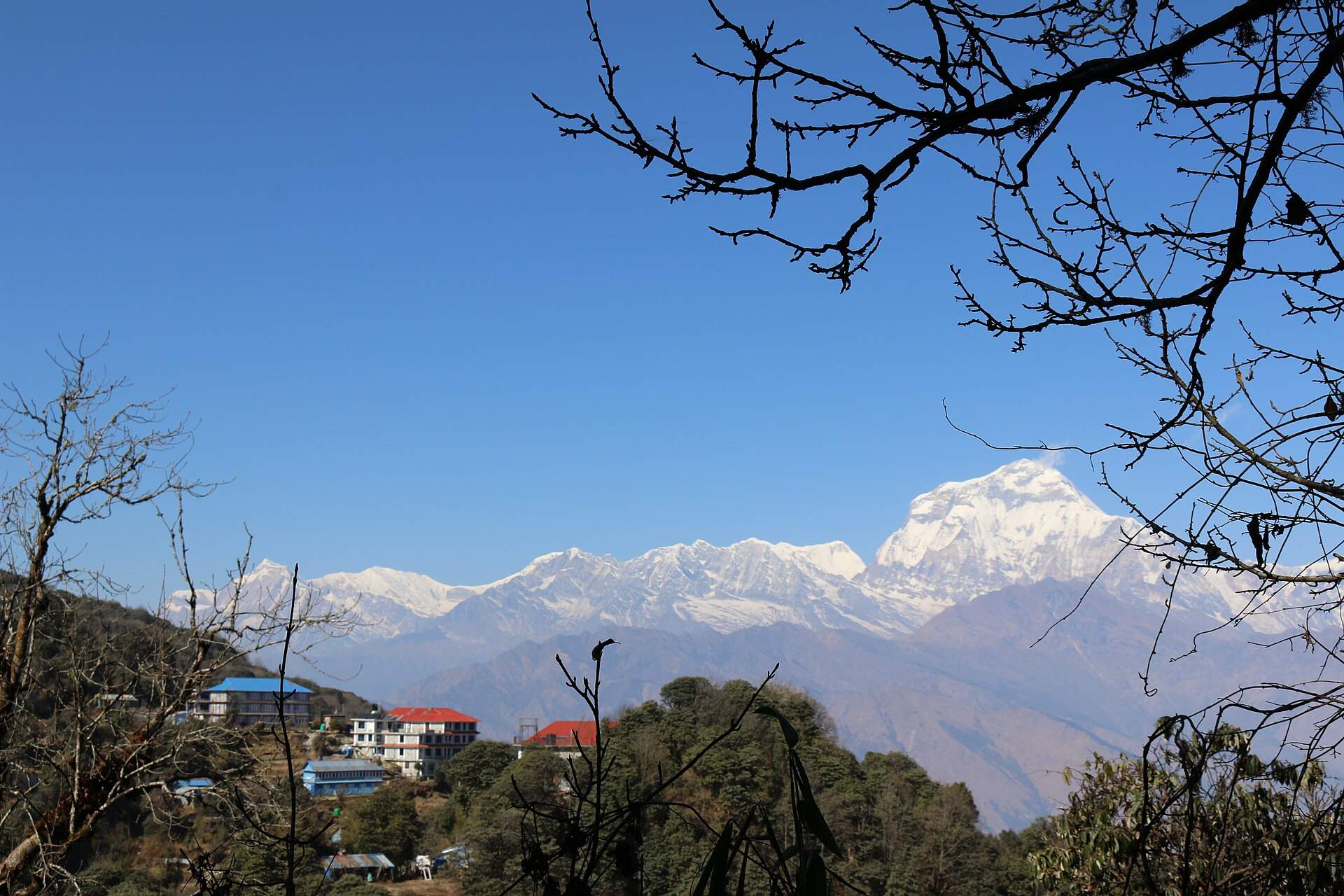
Ghorepani (2,874 m) is a long village of lodges along the ridge, with Dhaulagiri behind it on a clear afternoon. We usually arrive by early afternoon, which leaves time for a hot shower and an early night before the 4.30 am start.
Day 3: Poon Hill sunrise and on to Tadapani
The longest day: up Poon Hill by head torch, back for breakfast, then about five more hours along the ridge to Tadapani. The climb from Ghorepani to the summit takes about 45 minutes on stone steps. After the sunrise we come down for breakfast in Ghorepani and pack up.
The trail then climbs east through forest to the open ridge at Deurali, at a little over 3,100 m, with Dhaulagiri behind you and Annapurna South ahead. It drops through rhododendron and oak forest past Ban Thanti, a different hamlet from the one below Ghorepani, to Tadapani (2,680 m), a handful of lodges facing Annapurna South and Machhapuchhre. If the morning was cloudy on Poon Hill, Tadapani can make up for it at sunset or the next sunrise.
Day 4: Tadapani to Ghandruk and back to Pokhara
A gentle descent of about 670 m to Ghandruk (2,010 m), a large Gurung village of stone houses, then the drive back to Pokhara. The trail drops through forest and terraces to the stone houses and slate roofs of Ghandruk. There is time to visit the Gurung museum before our vehicle collects us for the drive of about three hours to Pokhara.
Day by day: Ghorepani Poon Hill trek
View tripDay1Drive to Nayapul and trek to Ulleri via Tikhedhunga
- Ulleri
- 2,070 m
- 5–6 h walking
- Breakfast, Lunch, Dinner
- Teahouse in Ulleri
We drive from Pokhara to Nayapul, about an hour and a half, and walk across the bridge to Birethanti, where your guide shows your ACAP permit at the checkpoint. The trail follows the Bhurungdi Khola past small farms and waterfalls to Tikhedhunga, then climbs the long stone staircase to the Magar village of Ulleri. It is the hardest climb of the trek, so take your time; from Ulleri you get your first view of Annapurna South.
Day2Ulleri to Ghorepani
- Ghorepani
- 2,874 m
- 4–5 h walking
- Breakfast, Lunch, Dinner
- Teahouse in Ghorepani
The gradient eases above Ulleri. We pass Banthanti and Nangethanti and climb into forest of oak and rhododendron, which turns red and pink with flowers in March and April. Ghorepani, a village of lodges strung along the ridge, is reached by early afternoon, leaving time to rest before the early start.
Day3Sunrise on Poon Hill, then trek to Tadapani
- Tadapani
- 2,680 m
- 6–7 h walking
- 11.5 km
- Breakfast, Lunch, Dinner
- Teahouse in Tadapani
We leave around 4.30 am by head torch for the 45-minute climb up stone steps to the viewing tower on Poon Hill (3,210 m). As the sun rises it lights Dhaulagiri, Tukuche Peak, Nilgiri, Annapurna South, Hiunchuli and Machhapuchhre. Back in Ghorepani for breakfast, we follow the forested ridge east past Deurali, then descend through Banthanti to Tadapani, which looks straight across to Annapurna South and Machhapuchhre.
Day4Tadapani to Ghandruk and drive to Pokhara
- Pokhara
- 822 m
- 2–3 h walking
- Breakfast, Lunch
- Your Pokhara hotel (not included)
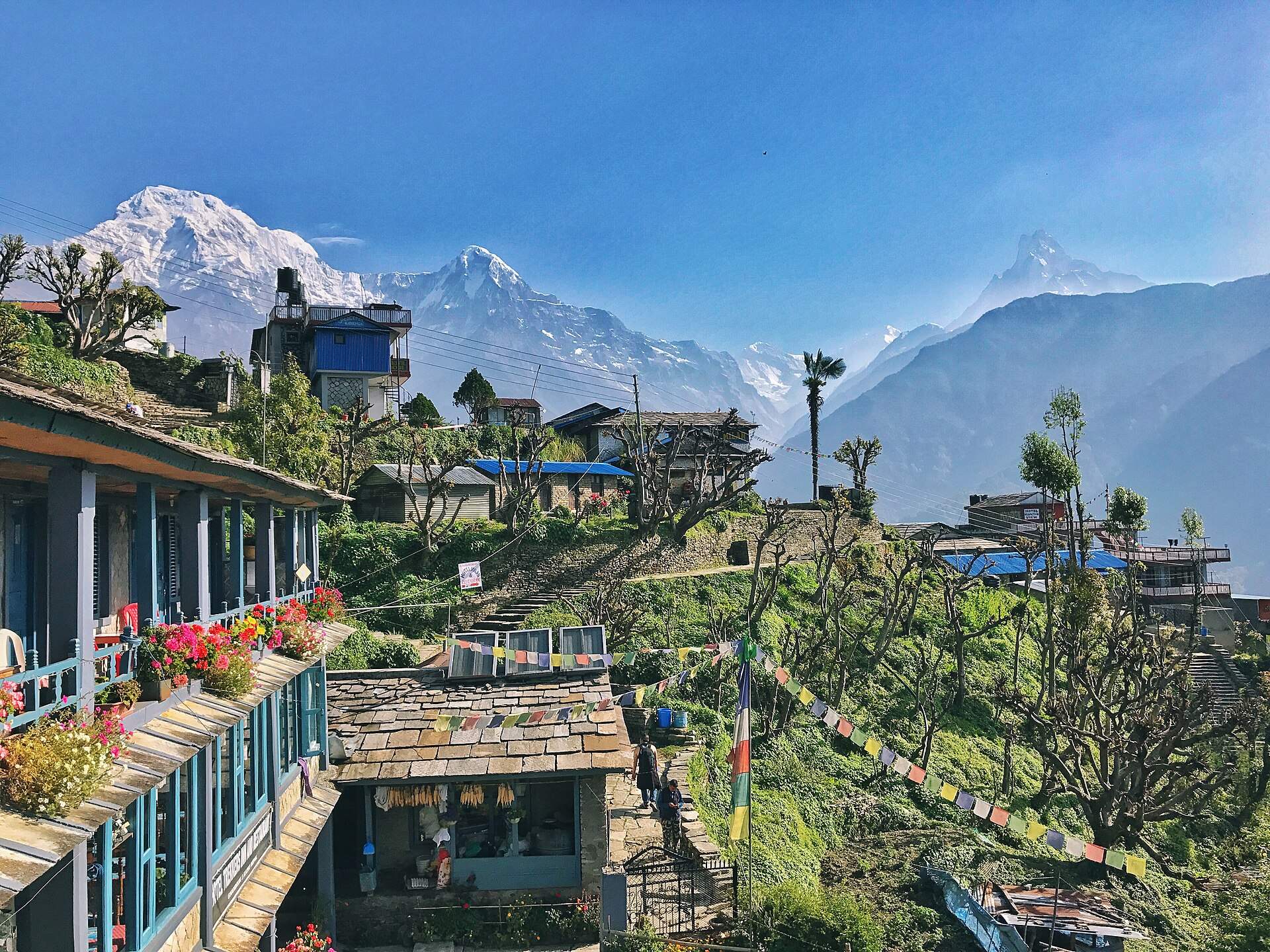
A gentle downhill walk through rhododendron forest brings us to Ghandruk, one of the largest Gurung villages in Nepal, with stone houses and slate roofs looking up at Annapurna South and Machhapuchhre. There is time to visit the Gurung museum before a vehicle collects us for the drive back to Pokhara, about three hours.
What can you see from Poon Hill at sunrise?
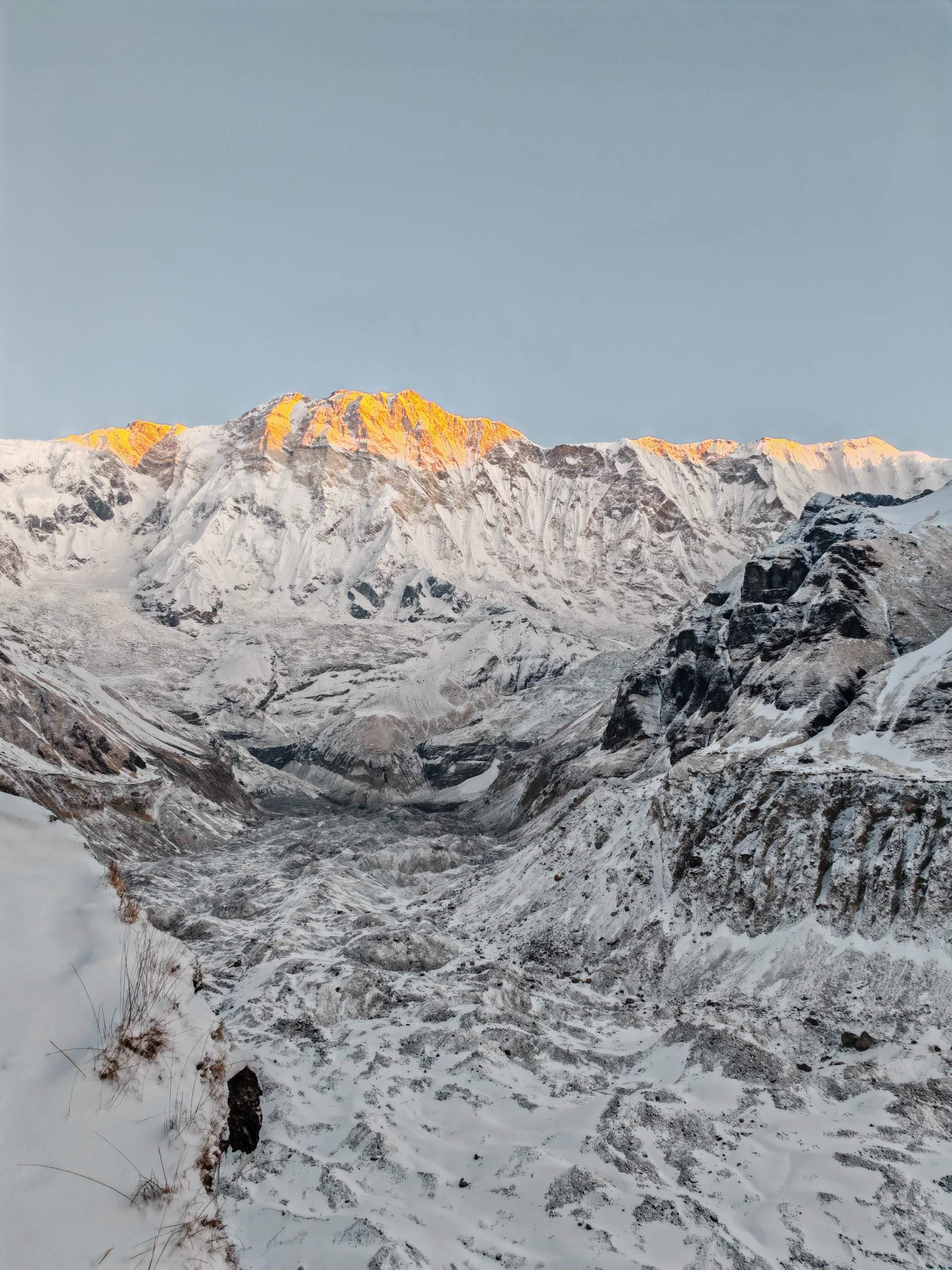
On a clear morning you see two 8,000 m peaks, Dhaulagiri and Annapurna I, and a line of six- and seven-thousanders from Tukuche Peak to Machhapuchhre. The deep Kali Gandaki gorge runs between the Dhaulagiri and Annapurna ranges. The light reaches Dhaulagiri first, then moves east along the range.
Peak | Height | Where to look |
|---|---|---|
Dhaulagiri | 8,167 m | North-west, the big white pyramid across the Kali Gandaki |
Tukuche Peak | 6,920 m | Just right of Dhaulagiri |
Nilgiri peaks | Over 6,800 m | North, above the gorge |
Annapurna I | 8,091 m | North-east, partly behind Annapurna South |
Annapurna South | 7,219 m | North-east, the closest big summit |
Hiunchuli | 6,441 m | East-north-east, in front of Annapurna South |
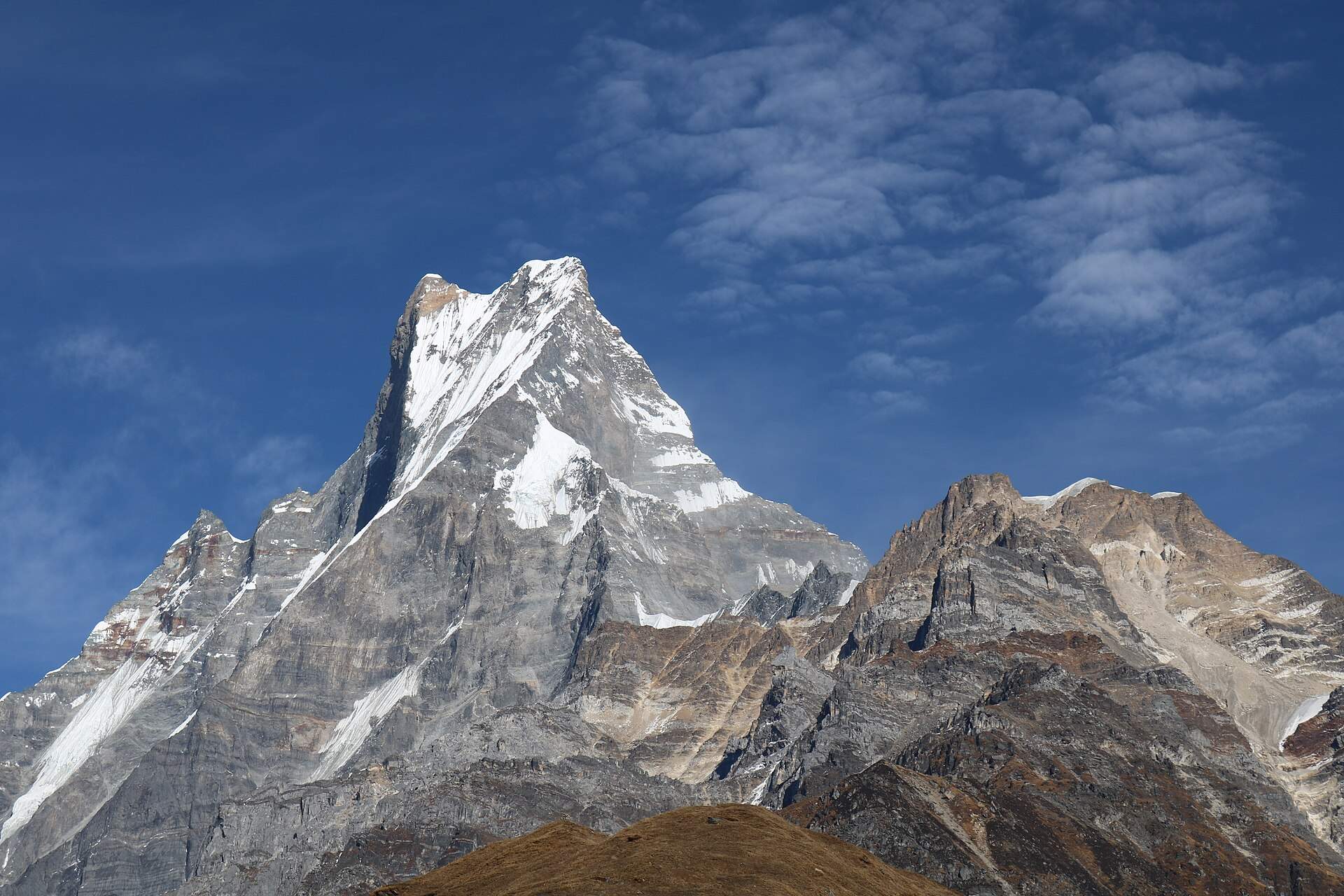
Machhapuchhre | 6,993 m | East, the sharp pointed peak on the far right |
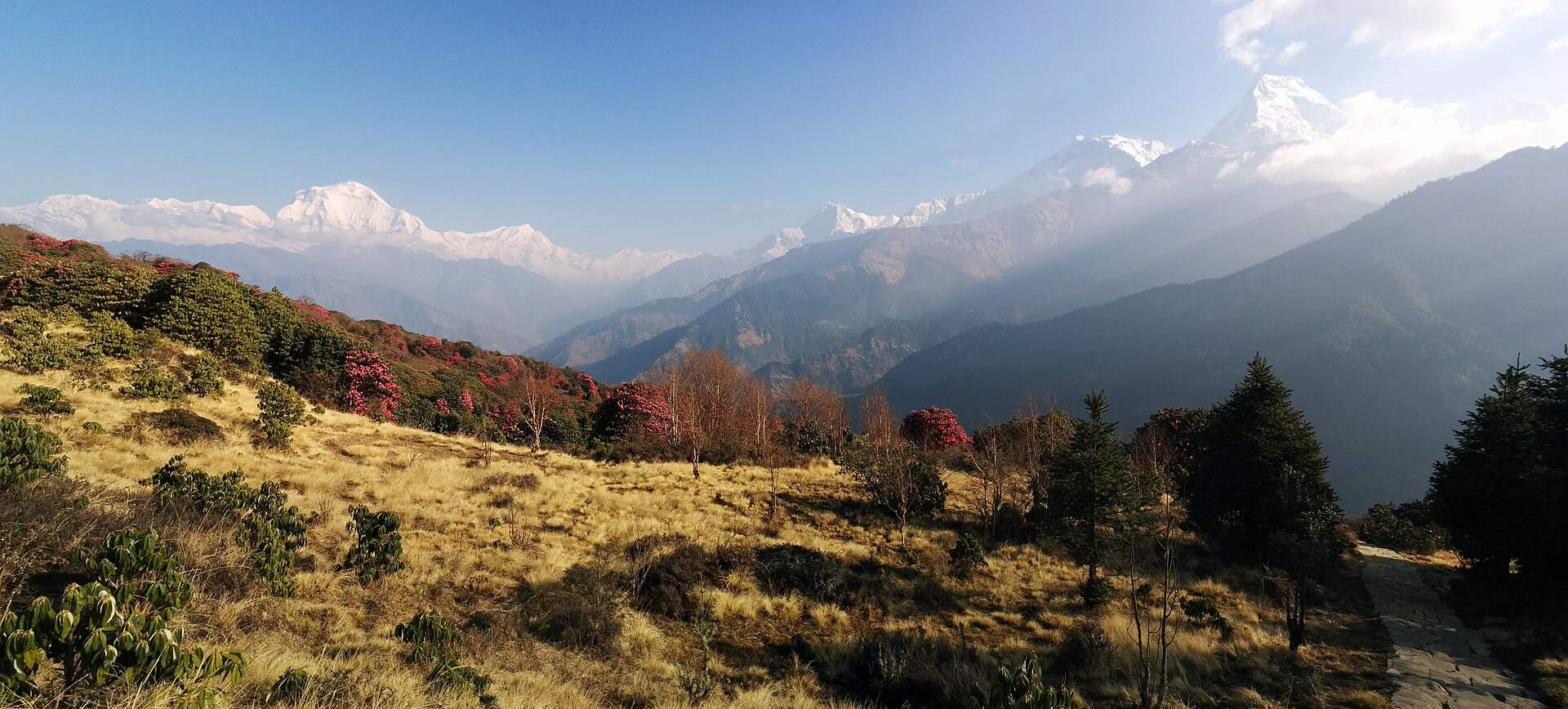
Sunrise moves by more than an hour across the trekking year. These are the times at Poon Hill, worked out for its position; the sun clears the eastern ridges a few minutes later, and the first pink light on Dhaulagiri comes before it.
Date | Sunrise (Nepal time) | Aim to be on top by |
|---|---|---|
15 March | 06:21 | 05:55 |
15 April | 05:45 | 05:20 |
15 October | 06:09 | 05:45 |
15 November | 06:32 | 06:05 |
15 December | 06:54 | 06:30 |
You buy the Poon Hill ticket, NPR 150 for foreigners, at a booth at the foot of the steps. The rural municipality contracts out the collection, and the same contractor runs the tea stall on top, so you can buy a hot drink at the summit.
How do you get to the start of the Poon Hill trek?
The trek starts and ends in Pokhara. From Kathmandu it is a 25-minute flight or six to eight hours by tourist bus, and from Pokhara it is about 1.5 hours by road to Nayapul. Arrive in Pokhara the day before, because we leave early on day one, and keep a spare day before your international flight.
On our trek we collect you from your Pokhara hotel, drive to Nayapul and walk from there. At the end the vehicle meets us at Ghandruk for the drive of about three hours back to Pokhara, on a winding road through Kimche.
Landslides close the Pokhara to Baglung road for hours or days now and then, most often in the monsoon, which is one more reason to arrive in Pokhara the day before and not the morning of the trek.
Which permits do you need for Poon Hill?
You need one permit, the Annapurna Conservation Area Project (ACAP) entry permit, which costs foreigners NPR 3,000, about USD 20. On top of that you pay NPR 150 at the foot of Poon Hill. The Nepal Tourism Board still lists a TIMS card for this route, though checks on the trail vary, and a licensed guide is required.
Permit or fee | Foreigner | SAARC national | Where it is checked |
|---|---|---|---|
ACAP entry permit | NPR 3,000 | NPR 1,000 | Birethanti checkpoint, and at ACAP offices along the trail |
ACAP bought at a checkpoint instead | NPR 6,000 | NPR 2,000 | Double the fee; avoid it |
Poon Hill entrance ticket | NPR 150 | Not published; we confirm | Booth at the foot of the summit steps |
TIMS card | NPR 2,000 | NPR 1,000 | Listed by the Nepal Tourism Board; checks vary, so we confirm at booking |
The operating agency applies for the ACAP permit in Pokhara before you start, so we need a clear scan of your passport photo page and one passport photo. Your guide carries it and shows it at the checkpoints. Our guide to Nepal trekking permits covers every region.
Do you need a guide for Poon Hill?
Yes. Since 1 April 2023, foreign trekkers on most protected-area routes in Nepal, Poon Hill included, must walk with a licensed guide booked through a registered agency. The rule is set by the Nepal Tourism Board, whose TIMS page lists the Poon Hill to Annapurna Base Camp route under it.
Checks on the trail vary, and you'll still meet people walking without one. A guide on Poon Hill is less about route-finding on the main trail than about the things that go wrong: a twisted ankle on the steps, a lodge that is full at Ghorepani, a river crossing in the monsoon. Our article on whether you need a guide to trek in Nepal explains how the rule works region by region.
How hard is the Poon Hill trek?
Poon Hill is one of the easiest Annapurna treks, but it isn't a stroll: you walk four to seven hours on each of the first three days, mostly on stone steps. Anyone in reasonable health who walks regularly can do it. The low altitude is what makes it easy; the steps are what make it tiring.
The effort comes in three places. The climb from Tikhedhunga to Ulleri on day one gains over 500 m in a couple of hours. The dawn climb to Poon Hill adds about 340 m before breakfast on the longest day. And the descent to Tadapani and Ghandruk is long enough to make your knees ache if you are not used to steps. Trekking poles help on the way down; you can hire them in Pokhara.
Altitude profile: Ghorepani Poon Hill trek
View tripYou sleep at 2,070 m, 2,874 m and 2,680 m and only go above 3,000 m briefly for sunrise. Ghorepani is above 2,500 m, the height at which altitude sickness can start, so a mild headache on the second night is possible, though most people feel nothing more than breathlessness on the climbs. Tell your guide about any headache that doesn't go away with water and rest, and don't climb Poon Hill if it's getting worse. Our guide to altitude sickness in Nepal explains the warning signs on higher treks.
Who is the Poon Hill trek right for?
It suits first-time trekkers, fit older walkers and families with active children who are used to walking several hours a day. We can slow the pace or add a day for younger children, and porters carry the main bags. It's a poor fit for anyone with bad knees who can't manage long flights of steps, because even with a jeep for the first day, the Poon Hill climb and the descents to Tadapani and Ghandruk are all on steps. Our list of the best treks in Nepal for beginners has gentler options.
To prepare, use the weeks before you travel for:
- To do:
Three or four hill walks of four to five hours, ideally on consecutive days
- To do:
Stair climbing, both up and down, to get your legs used to steps
- To do:
Walking in the boots you will trek in, so they are broken in before the Ulleri staircase
- To do:
Practising with trekking poles on a steep descent if you plan to use them
When is the best time to trek to Poon Hill?
October to December gives the clearest sunrise views, and late March to early April is the time for rhododendrons. Poon Hill also works in January and February if you are ready for cold mornings and possible snow. June to September is monsoon: rain, cloud and leeches, and the view is often hidden.
Months | Views at sunrise | Trail and weather | Crowds | Our verdict |
|---|---|---|---|---|
October–November | Clearest of the year | Dry, mild days, frosty mornings | Busiest; lodges fill | Best for views |
December | Usually very clear | Cold, frosty dawns | Quieter | Very good |
January–February | Often clear | Cold; snow sometimes at Ghorepani | Quiet | Good if prepared |
March–April | Clear early, haze and cloud by midday | Warm days, spring showers | Busy, especially in the bloom | Best for flowers |
May | Hazy | Hot low down, pre-monsoon storms | Quieter | Possible |
June–September | Mostly hidden | Rain, mud, leeches, slippery steps | Few trekkers | Poor |
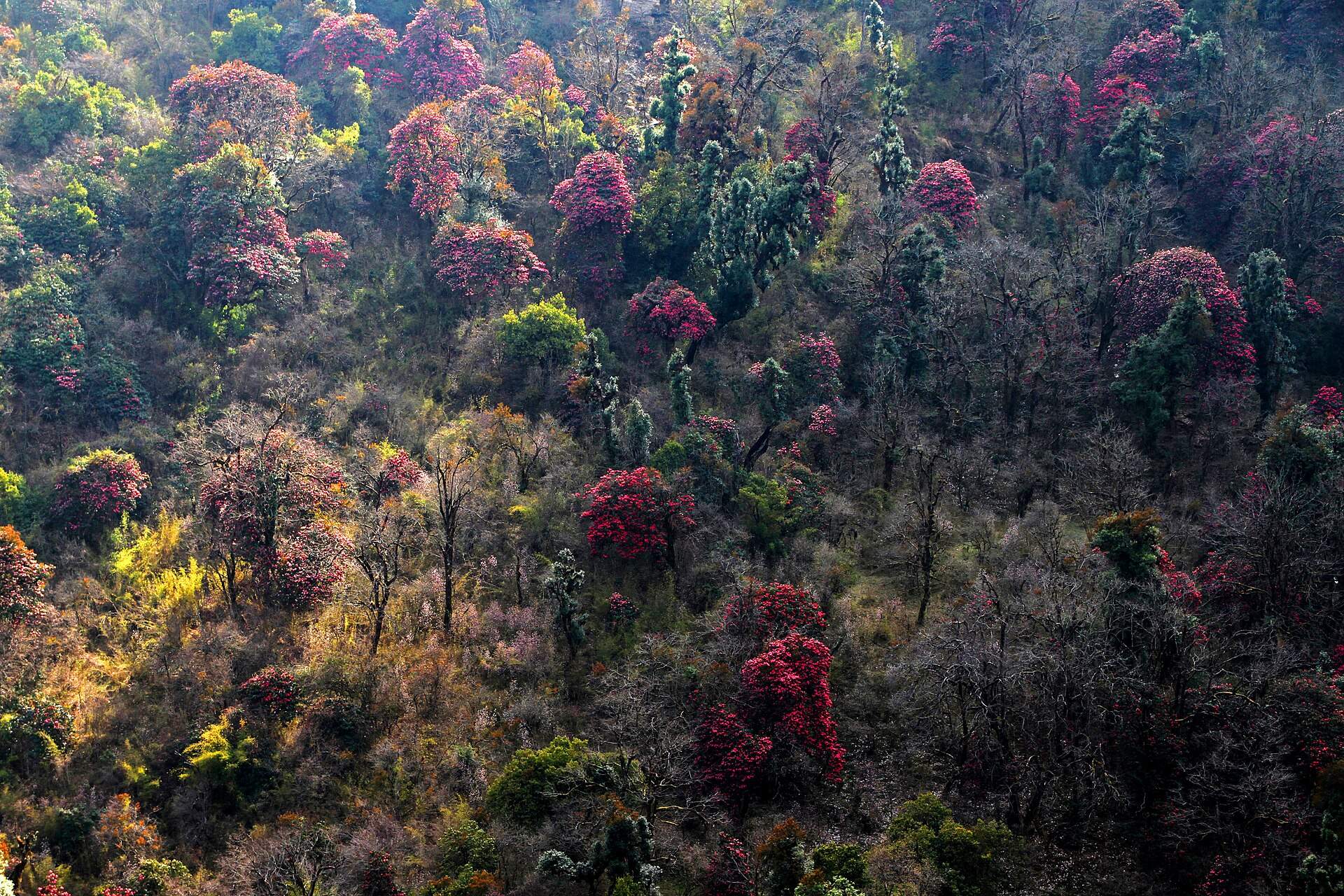
The rhododendron here is lali gurans, Rhododendron arboreum, Nepal's national flower, and the forests around Ghorepani are thick with it. In 2026 the first flowers opened in the third week of March, the ridges were fully red from late March to early April, and the petals were falling by the second week of April. The timing shifts by a week or two from year to year.
For how Poon Hill compares with the rest of the country month by month, see our best time to trek in Nepal guide.
What are the teahouses like on Poon Hill?
They're comfortable by Nepal trekking standards: simple twin rooms, hot showers, warm dining rooms and long menus in proper villages run by Magar and Gurung families. Rooms are not heated, and walls are thin. Ghorepani has by far the most lodges, and in late October and early April it's worth booking ahead.
Menus run from dal bhat, the rice and lentil set meal with free refills, to pancakes, pasta and apple pie. In the Annapurna region the lodge committee of each village agrees the menu prices, so lodges in the same village charge the same. Dal bhat is usually the best value and the most filling meal on the menu.
What | Typical price in 2026 |
|---|---|
Twin room | NPR 300–1,000 a night, often less if you eat in |
Dal bhat | NPR 600–900 |
Tea | NPR 50–150 a cup |
Hot shower | Free to NPR 300 |
Charging a device | Free to NPR 200 |
Wifi | Often free with dinner, or sold by the day |
There are no ATMs on the trail, so bring Nepali rupees from Pokhara for drinks, snacks, showers, charging and tips. Don't drink untreated tap or stream water: refill your bottles with boiled or filtered water from the lodges or the safe drinking water stations, or treat it yourself. Our guide to teahouse trekking in Nepal has the detail.
What should you pack for Poon Hill?
Pack light and warm: a porter carries your main bag, so keep it to about 10 kg, and bring the layers you need for a frosty hour on the summit at dawn. We lend you a down jacket and sleeping bag, so you don't need to bring or buy them. Leave anything you won't need on the trail in Pokhara.
- To do:
Broken-in waterproof boots with ankle support, and light shoes for the evenings
- To do:
Base layers, a fleece, a waterproof jacket and overtrousers
- To do:
Warm hat, liner and insulated gloves, and a buff for the summit
- To do:
Head torch with spare batteries for the dawn climb
- To do:
Daypack of 25–35 litres with a rain cover, and a duffel for the porter
- To do:
Two one-litre bottles and a filter, tablets or UV pen
- To do:
Trekking poles, which you can hire in Pokhara
- To do:
Microspikes from December to February if snow has fallen, hired in Pokhara
- To do:
Passport copy, insurance details and Nepali rupees in cash
Our full Nepal trekking packing list covers every season and what to rent in Pokhara.
How much does the Poon Hill trek cost?
Two people sharing a licensed guide and a porter spend about USD 280–440 each on the trail, tips included, or about USD 230–370 each with a guide only. That covers permits, trail transport, rooms, meals, extras, staff and tips. It leaves out international flights, the visa, insurance and hotel nights in Pokhara.
Cost item | Amount | Notes |
|---|---|---|
ACAP permit | NPR 3,000 (about USD 20) | Per person; children under ten free |
Poon Hill ticket | NPR 150 (about USD 1) | Paid at the foot of the steps |
Licensed guide | About USD 25–35 a day | Shared by the group; includes their food and lodging |
Porter | About USD 20–25 a day | Carries for two trekkers, up to about 20 kg |
Rooms and meals | About USD 25–40 a day | Per person; food is most of it |
Tips for guide and porter | About USD 92–128 for the trek | From a group of two |
Insurance | Policy must cover evacuation to 3,500 m | Usually sold for the whole trip |
At about NPR 148 to the US dollar (Nepal Rastra Bank, late November 2026), the permits come to roughly USD 21 a person. The full breakdown is in our Nepal trekking cost guide, how to hand over tips is in our guide to tipping guides and porters, and our travel insurance guide covers what your policy must include. A package such as ours bundles the guide, porter, permit, lodges, meals and transfers into one price, which we quote for your dates and group size.
What would we warn a friend about?
Poon Hill is popular for good reasons, which means it's busy, and the view depends on one morning's weather.
Crowds at sunrise. The Tourist Police counted 24,423 trekkers through Ghorepani in the Nepali year 2082 (April 2025 to April 2026). In late October and at the peak of the bloom the summit is shoulder to shoulder at dawn and the steps are a queue of head torches.
One sunrise, no guarantee. If Poon Hill is in cloud, the trek has no second attempt built in. Tadapani and Ghandruk often give good views the next morning, and on a 5-day version we can plan a second night at Ghorepani.
Spring haze. In March and April the peaks are usually clear at sunrise, but haze and cloud often hide them by late morning.
The road. Jeeps now reach Ulleri and Ghorepani, so the first two days are less remote than they were, and in dry weather a passing jeep raises dust.
Knees. The descents are long and stepped. If your knees complain on stairs at home, bring poles and walk the loop in our direction.
Cold dawns. It's cold on the summit before sunrise from October onwards, and December dawns are frosty. We lend you a down jacket for this reason.
What are the quieter alternatives to Poon Hill?
Mohare Danda and Khopra Danda reach ridges above Ghorepani on community lodge trails, and both still finish with the Poon Hill sunrise. If you want height and close mountain views instead, Mardi Himal is the better choice.
Mohare Danda, 5 days. From Galeshwor through the Magar villages of Banskharka and Nangi to a ridge-top community lodge at 3,300 m, then along the forest to Ghorepani and Poon Hill. Graded moderate.
Khopra Danda, 8 days. From Ghandruk and Tadapani up to Dobato and Khopra Danda (3,660 m), facing Dhaulagiri, with a day hike to Khayer Lake at about 4,660 m, then down to Ghorepani for Poon Hill.
Mardi Himal, 5 days. A higher, harder ridge walk below Machhapuchhre to about 4,200 m. Our comparison of Mardi Himal and Poon Hill sets the two side by side.
Our Ghorepani Poon Hill trek from Pokhara
Our trek is four days from Pokhara to Pokhara, fully guided, for one to twelve people, as a small group or a private trip on the dates you choose. We collect you from your Pokhara hotel, walk the classic route up through Ulleri and come back through Tadapani and Ghandruk.
Key facts: Ghorepani Poon Hill trek
View trip- Length
- 4 days
- Grade
- Easy(1 of 5)
- Highest point
- 3,210 m · Poon Hill
- Best months
- Mar–Apr, Oct–Dec
- Starts and ends
- Pokhara
- Walking
- 2–7 hours a day
- Group or private
- 1–12 people
- Stay
- Teahouse
- Fully guided
- Guides speak English, Nepali
A licensed, English-speaking guide leads every trek, and the operator sends one porter for every two trekkers, carrying up to about 20 kg between them, so keep your bag to about 10 kg. The price includes the ACAP permit, teahouse rooms, three meals a day with tea or coffee, all road transfers and the loan of a down jacket and sleeping bag. Your guide carries a first aid kit and a pulse oximeter for daily checks.
Pokhara hotel nights, drinks and snacks, showers and charging, tips and insurance are not included. Tell us your dates, group size and the ages of any children, and we'll send a quote for the 4-day trek, or for a shorter or longer version if that suits you better.
Treks that include the Poon Hill sunrise
Frequently asked questions
Can you do the Poon Hill trek in 2 or 3 days?
Three days is realistic if you drive by jeep to Ulleri or further and walk at a good pace, going over Poon Hill on the second morning and finishing at Ghandruk. Two days is possible only by driving almost to Ghorepani, which turns it into a sunrise trip rather than a trek. We recommend four days for most people.
How many steps are there from Tikhedhunga to Ulleri?
Nobody has made an official count, but there are over 3,000 stone steps, and the climb gains over 500 m in a couple of hours. It is the hardest section of the trek, so walk it slowly, take regular breaks and drink plenty of water.
How long does it take to climb Poon Hill from Ghorepani?
About 45 minutes for most people, up stone steps from the top of Ghorepani village. Allow longer in October, November and April, when the steps are busy before sunrise. Coming down takes about half an hour, and you are back in time for breakfast.
Is Poon Hill worth it if the morning is cloudy?
Yes, for the trek as a whole. The forest, the villages and the views from Tadapani and Ghandruk do not depend on one sunrise. Sometimes the cloud lies in the valleys below Poon Hill with the peaks clear above it, so it is worth going up unless it is raining hard.
Is the Poon Hill trek good in December?
Yes. December is one of the clearest months for the sunrise, and the trail is quieter than in October and November. It's cold, with frosty dawns on the summit, so bring warm gloves and a hat. We lend you a down jacket and sleeping bag.
Can children do the Poon Hill trek?
Yes, children who are used to walking several hours a day manage it well, and the low altitude makes it one of the best family treks in Nepal. The Ulleri steps are the main challenge. We can slow the pace or add a day, and porters carry the main bags.
Is there wifi and phone signal on the Poon Hill trek?
Most lodges in Ulleri, Ghorepani, Tadapani and Ghandruk have wifi, often free with dinner or sold by the day. Mobile signal works in many places but is patchy in the forest. Carry a power bank, as charging can cost a small fee.
Is Poon Hill or Annapurna Base Camp better for a first trek?
Poon Hill if you have four or five days or are unsure about your fitness; Annapurna Base Camp if you have ten days and want to reach 4,130 m below the Annapurna face. Our Annapurna Base Camp trek starts with the Poon Hill loop, so you can have both.