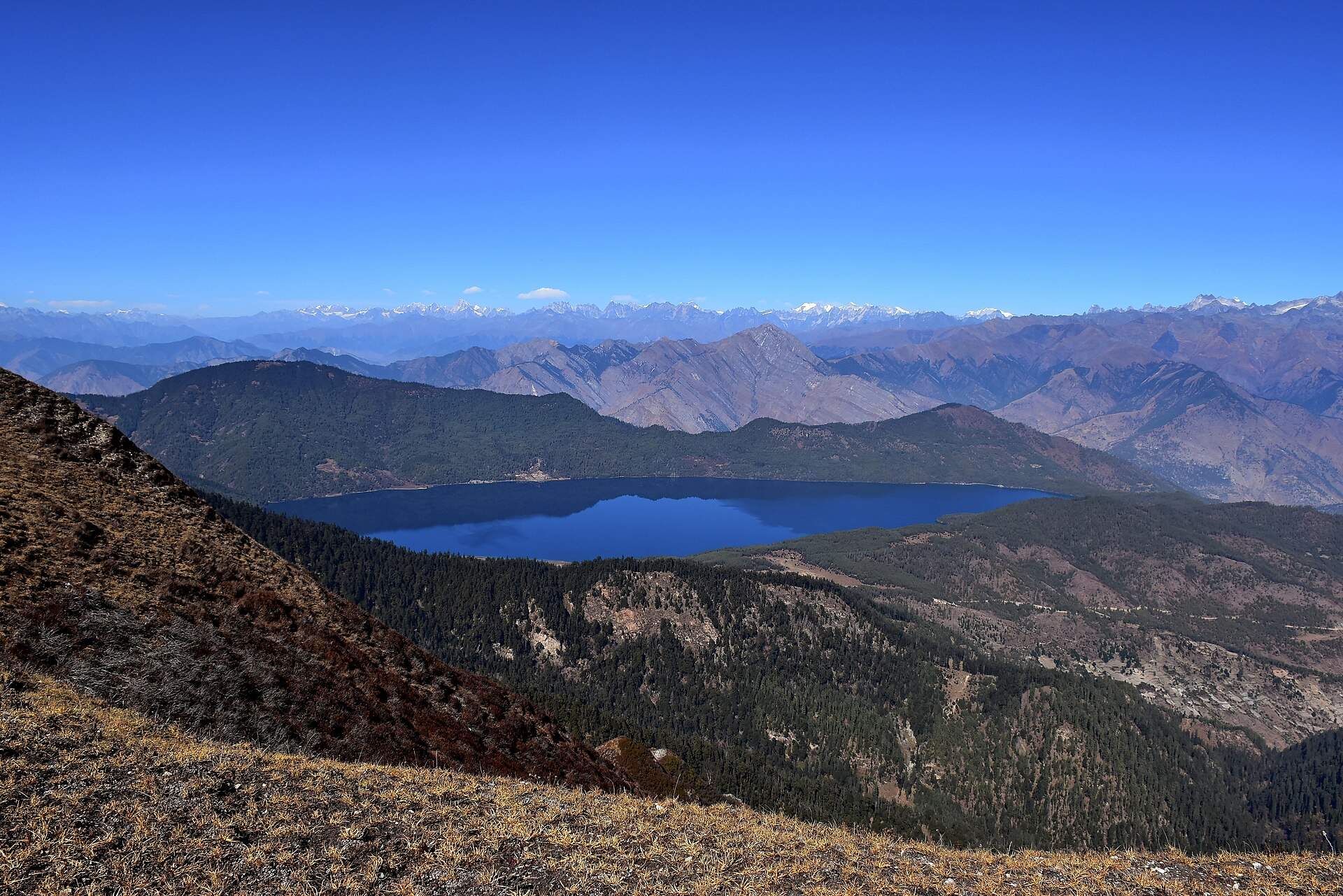
Far West (Rara, Api)
1 trip
Far West Nepal, the Karnali region around Jumla and Mugu, is one of the least visited parts of the country for trekkers. Its forests, high pastures and villages are a long way from Kathmandu, and the main draw is Rara Lake, Nepal's largest lake, inside Rara National Park. The area also has a long history: the Sinja valley near Jumla was the centre of the medieval Khasa kingdom. Trails are quiet, and you meet very few other trekkers.
Our Far West trek
Rara Lake Trek (13 days, 9 of them walking, top point 3,804 m at Chuchemara Danda) is a loop from Jumla through the Sinja valley to Rara Lake, returning over the Ghurchi Lagna and Danphe Lagna. It suits reasonably fit walkers who are happy with five to seven hours on foot most days, with climbs of 500 to 900 m on several days. Altitude is a factor but rarely a serious one if you follow your guide's pacing. It is a good choice if you have already done one of the busier treks and want something remote without a high pass.
Permits in 2026
You need two permits:
- Rara National Park entry permit: NPR 3,000 for foreign nationals and NPR 1,500 for SAARC nationals. You register at the park office on arrival at the lake.
- TIMS card: NPR 2,000 (NPR 1,000 for SAARC nationals), issued only through a registered agency.
Since 1 April 2023 foreign trekkers on most protected-area routes must walk with a licensed guide booked through a registered agency, so independent trekking is not an option here. The operator arranges both permits before the trek.
Getting there
Jumla is reached by small aircraft from Nepalgunj in the western lowlands. There are no direct flights from Kathmandu that fit the schedule, so the trip spends the first night in Nepalgunj. Jumla flights run early in the morning and are cancelled when cloud or wind closes the valley. The baggage allowance is usually 10 to 15 kg including hand luggage, so leave extra kit in Kathmandu. The itinerary keeps a spare day at the end in case of delays.
Seasons, altitude and difficulty
The trek runs from March to May and from September to November. Autumn gives the clearest skies over the lake, and spring is warmer. The monsoon brings cloud and flight cancellations, and winter snow can close the higher ridges. The trek is graded moderate: there is no technical ground, but the days are steady and the region is remote, so your insurance must cover helicopter evacuation.
For a wider view of what each region needs, read our guide to Nepal trekking permits.