Skip to content
Himalayan Trek Quest
WhatsApp +9779769211118
Plan your trek
Nepal TreksGalleryAbout usContactTrekking GuidesFAQsPlan your trek

Solo trekking in Nepal

The main trails have a lodge every hour or two and plenty of other walkers in season, so Nepal is an easy place to trek on your own. Since 2023, though, most routes need a licensed guide. Here is how the rule works in 2026, the best treks for a solo traveller and what a trek for one costs.

Solo trekking at a glance

Guide rule
A licensed guide is required on most protected-area routes since 31 March 2023
Everest region
The guide rule is not strictly enforced there: tolerated, not allowed
Restricted areas
Since March 2026 one person can get the permit, still with a guide
Best first solo trek
Ghorepani Poon Hill, 4 days from Pokhara
Price for one
Two or three people pay about 15–25% less each than one
Tourist Police
Hotline 1144

Can you trek alone in Nepal in 2026?

Not on most routes. A revised TIMS provision took effect on 31 March 2023. Foreign trekkers in the listed protected areas, which include the Annapurna, Langtang, Manaslu and Everest regions, must walk with a licensed trekking guide and carry a TIMS card issued through a registered trekking agency (Nepal Tourism Board). The fine reported at the time was NPR 12,000 per trekker. The TIMS card is now issued online by the agency as a QR e-card.

The Everest region works differently in practice. The Khumbu Pasang Lhamu rural municipality issues its own entry permit and has not strictly enforced the national guide rule, so independent trekkers are still common on the main Everest trails (ExplorersWeb, October 2026). Officials still call trekking there without a guide a violation, so treat it as tolerated, not allowed.

Restricted areas now accept one person. Manaslu, Tsum, Nar Phu and Upper Mustang need a special restricted-area permit, which used to be issued only to groups of two or more. Since March 2026 the Department of Immigration issues it to individuals as well. A licensed guide and a registered agency are still required, and one guide may lead no more than seven trekkers (Republica, March 2026).

What this means when you book: every trek on this site is fully guided, and any of them can be booked as a private trek for one person. Your guide is a licensed guide employed by the local operator that runs your trek, named in your booking confirmation. For the full rules by region, read do you need a guide to trek in Nepal.

Best treks in Nepal for solo travellers

These are the routes that suit a solo trekker best: busy enough that you are never the only guest in the lodge, with short stages between villages, and either an easy start from Pokhara or a road trailhead from Kathmandu. Prices are per person for a private trek, as shown on each trek page.

Solo-friendly treks compared
TrekDaysHighest pointWhy it suits a solo trekker1 personEach, for 2–3
Ghorepani Poon Hill43,210 mShort, busy and easy to organise from Pokhara. The best first trek.US$410US$315
Mardi Himal54,200 mA ridge walk with close views of Machhapuchhre, quieter than base camp.US$475US$375
Short Annapurna Base Camp74,130 mBase camp in a week, with a private jeep both ways.US$790US$590
Annapurna Base Camp104,130 mPoon Hill and the Sanctuary on one of Nepal's busiest trails, with lively lodge dining rooms.US$990US$760
Khopra Danda84,660 mCommunity-run lodges on a quiet ridge facing Dhaulagiri, for solo trekkers who want space.US$795US$625
Langtang Valley84,984 mThe closest high-mountain trek to Kathmandu, by road with no flights.US$850US$680
Annapurna Circuit105,416 mThe classic long route over Thorong La, with plenty of trekkers in season.US$1,450US$1,090
Everest Base Camp155,545 mThe best-known trek in Nepal, never short of company.US$1,795US$1,480

New to trekking? Start with Poon Hill or Mardi Himal from Pokhara. Have two weeks? Annapurna Base Camp or Langtang give you real altitude without a high pass. See also the best treks for beginners.

Is it safe to trek alone in Nepal?

With a licensed guide, on a main route and in season, the risks come from the mountains more than from other people: altitude, weather, landslides and slips on wet stone steps. The guide rule exists because trekkers walking alone went missing or were hurt with nobody to raise the alarm. When the rule was announced, the Nepal Tourism Board said it dealt with around 40 to 50 missing-trekker cases a year; the Tourist Police put the number of foreigners at three or four a year. In October 2026 a solo trekker in the Everest region had to be evacuated after a fall near Kongma La.

Government travel advice says the same thing. The UK Foreign Office tells travellers “Do not trek alone”, and Canada's advice notes that armed robberies, particularly of solo trekkers, occur occasionally.

Practical steps

  • Insurance: get cover for trekking and helicopter evacuation up to your trek's highest altitude. It is a condition of booking.
  • Altitude: walking alone, it is easy to ignore a headache. Your guide checks you each evening; tell them how you feel. Read our guide to altitude sickness in Nepal.
  • Share your plan: leave your itinerary and the operator's contact details with someone at home, and agree when you will next be in touch.
  • Phone: buy a local SIM in Kathmandu or Pokhara. Many villages on the main trails have signal or lodge wi-fi, but expect gaps in gorges and high valleys.
  • Emergencies: Tourist Police hotline 1144, Nepal Police 100. The Tourist Police office in Pokhara is on 061-462761.

More on how treks are run and what happens in an emergency: trust and safety.

What does a solo trek cost?

On a private trek, one person carries the whole cost of the guide's time, the transport and the permits paperwork, so the price per person is highest for one and drops as soon as a friend joins. Every trek page shows four prices: for one person, for two or three, for four to seven, and for eight or more. Ghorepani Poon Hill, for example, is US$410 for one person, US$315 each for two or three, US$295 each for four to seven and US$270 each for eight or more. What is included is listed on each trek page, usually the licensed guide, permits, teahouse rooms, meals on the trek and road transfers.

Rooms in teahouses

Most teahouse rooms are twins. Some lodges charge per room and some per person, and in peak season single rooms are hard to find on the higher stages of the Everest and Annapurna Circuit routes. Rooms are booked by the operator as part of your trek, so ask us how they are handled on your route when you enquire. Read more about teahouse trekking in Nepal.

Meeting other trekkers

You will rarely eat alone. Teahouse dining rooms are warmed by one stove, so in the evening everyone sits together, and on the busy routes in October, November, March and April you meet the same faces every night. If you would like company on the trail itself, bring a friend: two or three people booking together pay less each.

When to go

October and November give the clearest views and the busiest trails, which suits most solo trekkers. March to May is warmer, with rhododendrons in flower on the Annapurna ridges. December to February is quiet and cold, fine for low treks such as Poon Hill. From June to September the monsoon brings rain, leeches and cloud. See the best time to trek in Nepal.

Solo-friendly treks you can book

Every one of these can be booked as a private trek for one person, with a licensed guide from the operator that runs it.

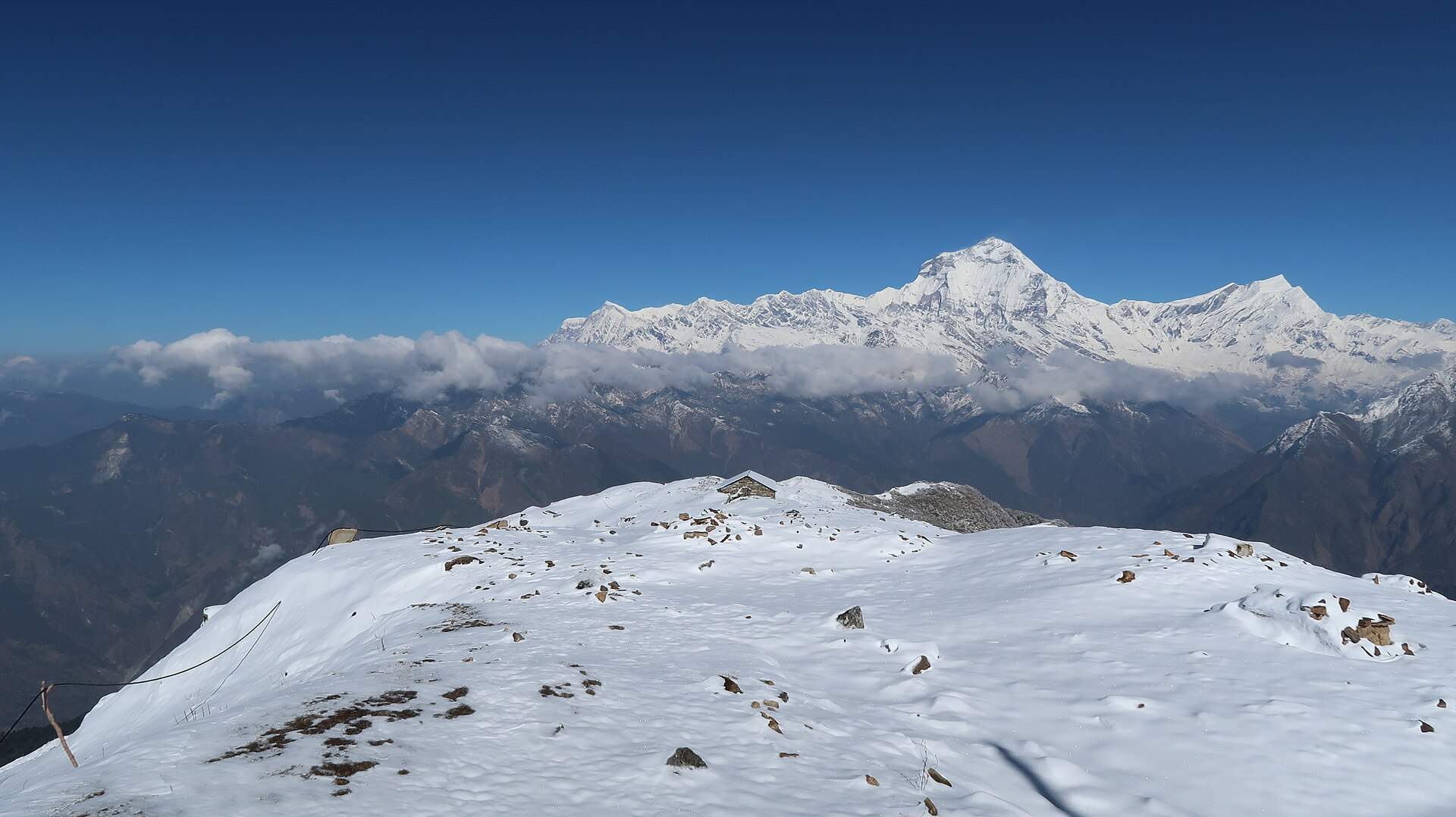
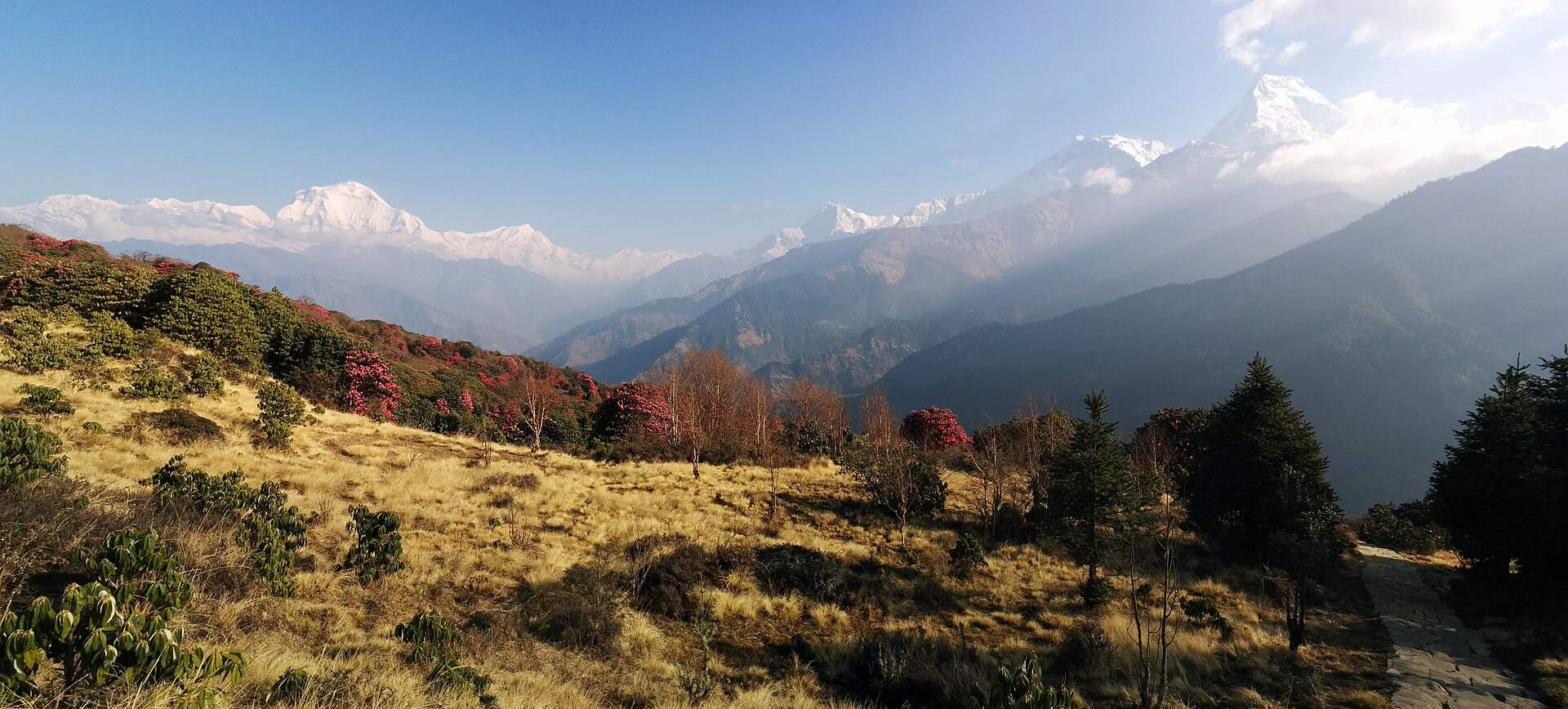
Dhaulagiri and the Annapurna range from Poon Hill, with rhododendrons in flower
Length
4 days
Grade
Easy(1 of 5)
Highest point
3,210 m

The Ghorepani Poon Hill Trek is a four-day guided teahouse loop from Pokhara to Poon Hill (3,210 m), the highest point of the trek, for sunrise over Dhaulagiri, the Annapurnas and Machhapuchhre. It is graded easy and makes a good first trek in Nepal: the highest night is at Ghorepani (2,874 m), so altitude rarely causes more than mild breathlessness. It is not effortless, though. The first day climbs thousands of stone steps from Tikhedhunga to Ulleri, and you walk four to seven hours on each of the first three days. It suits anyone in reasonable health who walks regularly, including families with active older children. You go up through Ulleri and Ghorepani and return through rhododendron forest via Tadapani and Ghandruk. A licensed guide, the ACAP permit, meals on the trek and road transfers are included, with one porter included for every two trekkers.

Upcoming departures

  • Dec 1, 2026500 seats left
  • Dec 2, 2026500 seats left
  • Dec 3, 2026500 seats left

+57 more dates

From

US$410per person
View trip
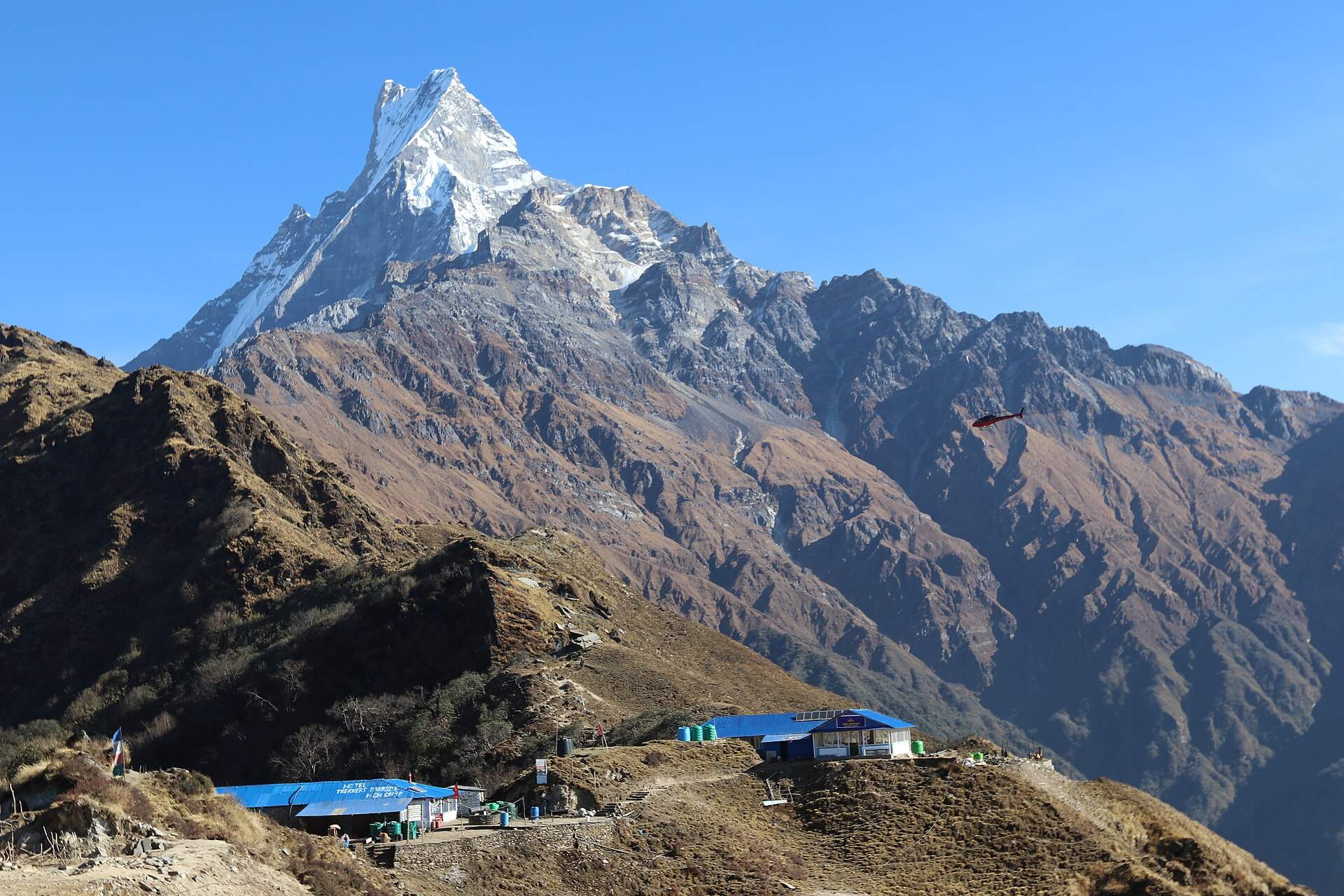
The lodges at High Camp with Machhapuchhre behind
Length
5 days
Grade
Moderate(2 of 5)
Highest point
4,200 m

The Mardi Himal Trek is a five-day guided teahouse trek from Pokhara along a forested ridge to the Mardi Himal Upper View Point at about 4,200 m, close beneath the south face of Machhapuchhre. It is graded moderate: you walk three to eight hours a day, the trail is steep in places, and the summit day climbs about 600 m before dawn. It suits fit walkers who are happy on steep, uneven trail; previous trekking experience helps but is not required. You stay in simple lodges at Forest Camp, Low Camp and High Camp (3,580 m), then descend to Siding for the drive back to Pokhara. A licensed guide, the ACAP permit, meals on the trek and road transfers are included, with one porter included for every two trekkers. In good conditions your guide can continue to Mardi Himal Base Camp at about 4,500 m.

From

US$475per person

View trip
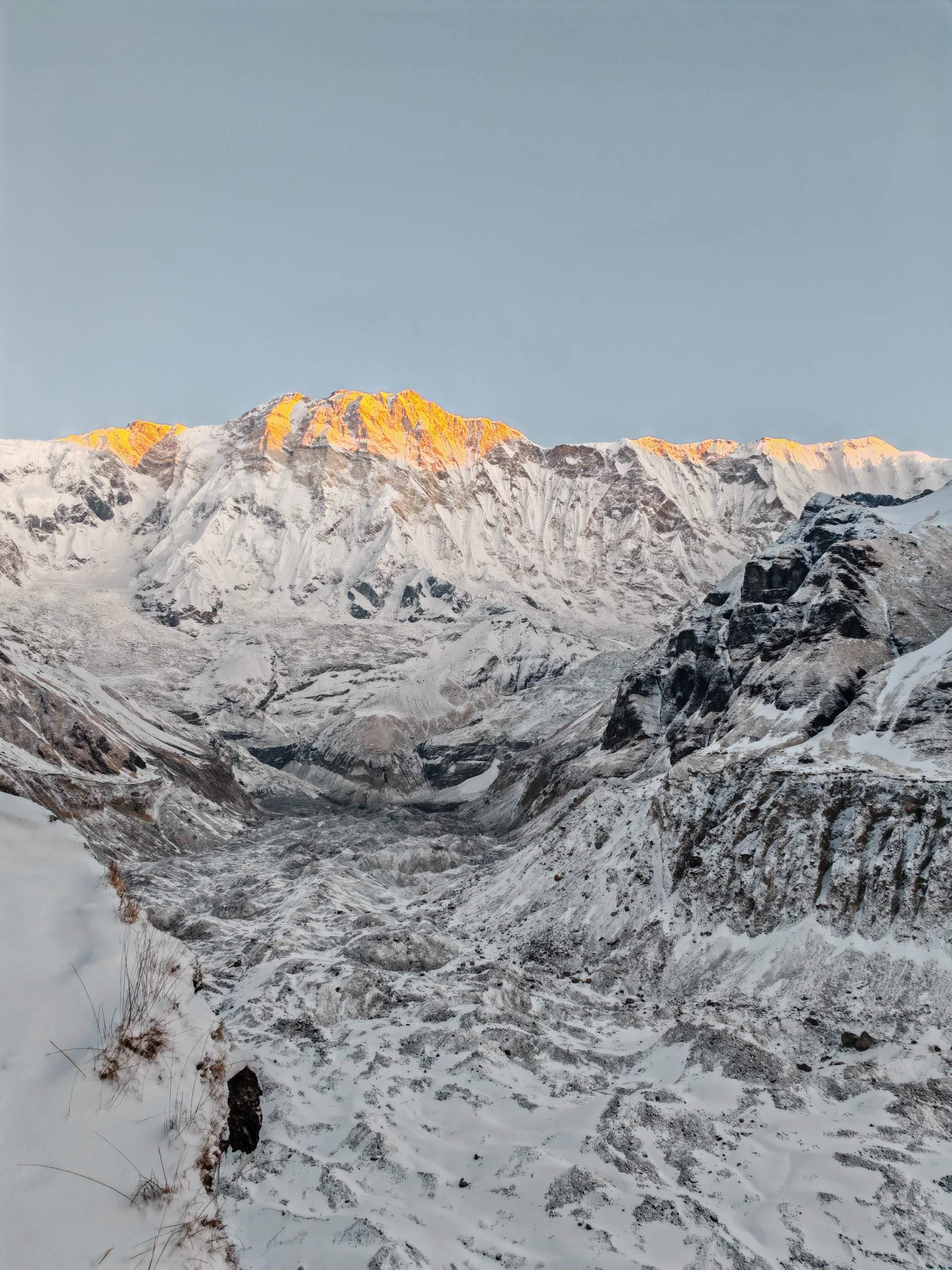
Annapurna I at sunrise above the glacier amphitheatre at Annapurna Base Camp
Length
7 days
Grade
Moderate(2 of 5)
Highest point
4,130 m

The Short Annapurna Base Camp Trek takes you from Pokhara to Annapurna Base Camp (4,130 m) and back in seven days, with a private jeep both ways and a licensed guide and porter included (one porter for every two trekkers). The jeep drops you at Samrung below Jhinu Danda, and the trail climbs through Chhomrong, Dovan and Deurali into the Annapurna Sanctuary. Unlike most short itineraries, we sleep at Machhapuchhre Base Camp (3,700 m), so the climb from Deurali to base camp is split over two nights instead of one 930 m jump. You see the evening and the sunrise at base camp, descend to Bamboo, then walk out through Chhomrong to the jeep on day seven. There is no spare day, so from December to February snow can stop the group before ABC. Want Poon Hill too? Take the 10-day trek.

From

US$790per person

View trip
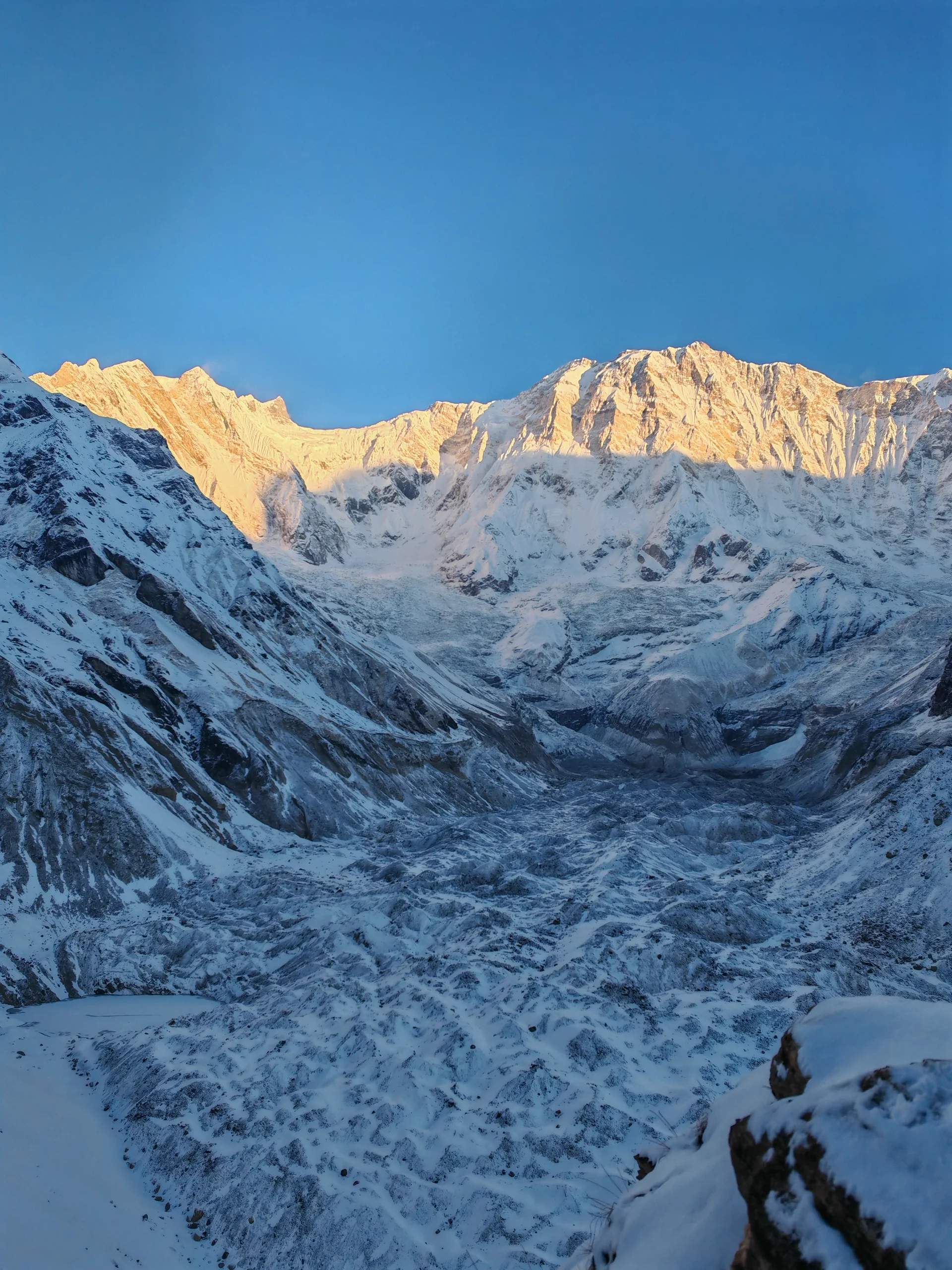
Annapurna I in golden sunrise above the glacier at Annapurna Base Camp
Length
10 days
Grade
Moderate(2 of 5)
Highest point
4,130 m

The Annapurna Base Camp Trek is a ten-day guided teahouse trek from Pokhara to Annapurna Base Camp (4,130 m), the highest point of the trek, in the glacial basin of the Annapurna Sanctuary. This route goes via Ghorepani for sunrise from Poon Hill (3,210 m), then crosses to Chhomrong and follows the Modi Khola gorge past Machhapuchhre Base Camp. It is graded moderate, with no technical sections: expect four to seven hours on the trail most days and a great many stone steps. It suits fit walkers who have not been to altitude before, and the early days on lower ground help your body adjust before the final climb. You finish at the Jhinu hot springs and drive back to Pokhara from Siwai. A licensed guide, the ACAP permit, meals on the trek and road transfers are included, with one porter included for every two trekkers.

From

US$990per person

View trip
Dhaulagiri (8,167 m) seen across the Kali Gandaki gorge from the snow-covered top of Khopra Danda
Length
8 days
Grade
Moderate(2 of 5)
Highest point
4,660 m

An eight-day trek from Pokhara to Khopra Danda, a 3,660 m ridge facing Dhaulagiri, staying in community-run lodges away from the main Annapurna trails, with an optional day hike to the sacred Khayer Lake at about 4,660 m and a finish at Poon Hill.

From

US$795per person

View trip
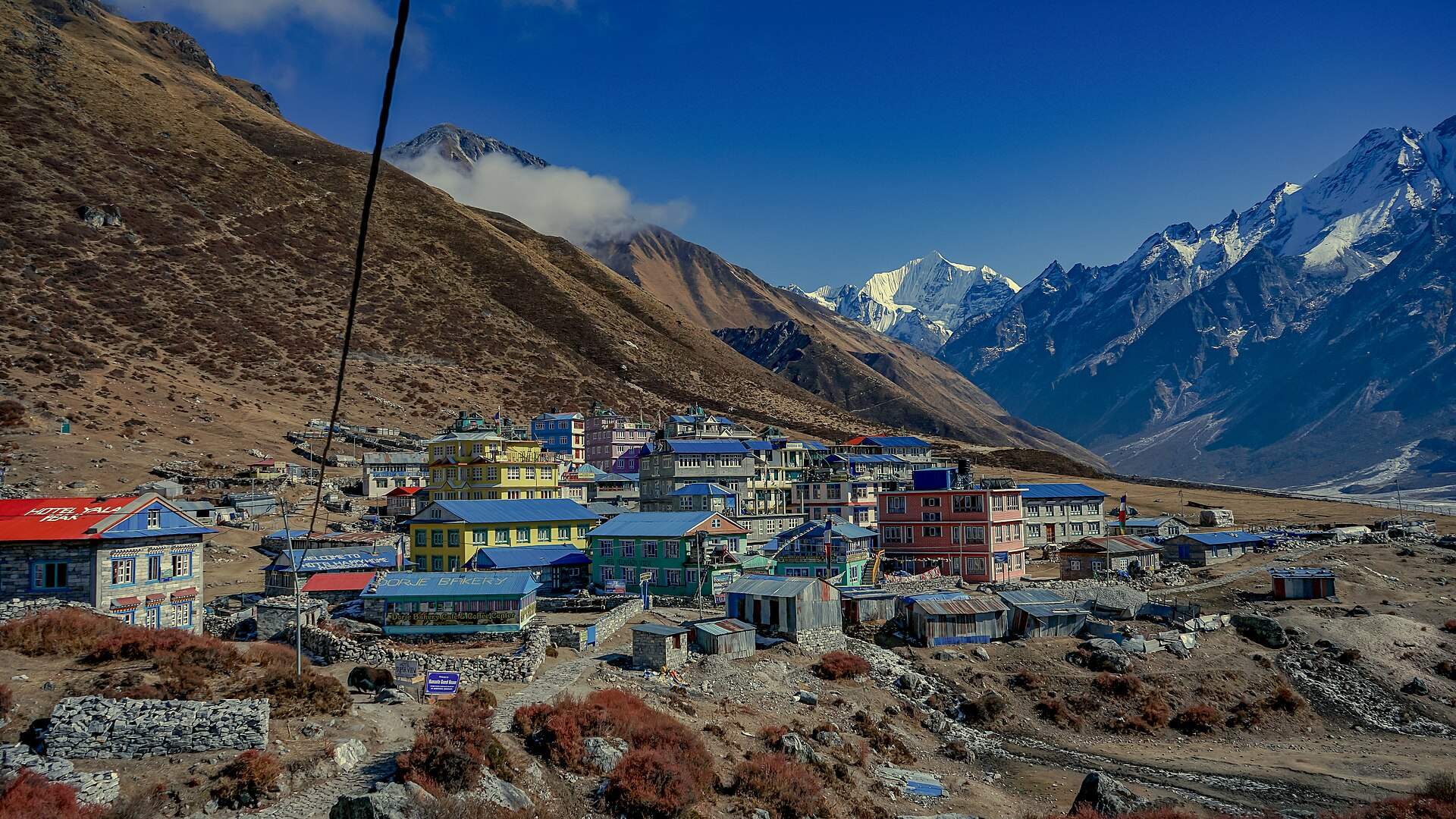
Teahouses of Kyanjin Gompa with snow peaks at the head of the Langtang Valley

Langtang and Helambu

Langtang Valley Trek

Length
8 days
Grade
Moderate(2 of 5)
Highest point
4,984 m

A week-long walk up the Langtang Khola from Syabrubesi to Kyanjin Gompa at 3,870 m, through the rebuilt Tamang villages of Langtang and Mundu, with a day climbing Tserko Ri (4,984 m) for a close view of Langtang Lirung and the peaks at the head of the valley. It is the closest high Himalayan trek to Kathmandu, reached by road with no flights. While the Syabrubesi bridge is rebuilt after the August 2026 flood, we confirm before each departure whether we start from Syabrubesi or Dhunche.

From

US$850per person

View trip

Solo trekking questions

Can I trek alone in Nepal without a guide?

Not on most routes. Since 31 March 2023 foreign trekkers in Nepal's listed protected areas, including the Annapurna, Langtang, Manaslu and Everest regions, must walk with a licensed guide and a TIMS card issued by a registered trekking agency. The Everest region is the exception in practice: the local municipality has not strictly enforced the rule, but officials still call trekking there without a guide a violation.

Can I get a restricted-area permit as one person?

Yes, since March 2026. The Department of Immigration now issues restricted-area permits for places such as Manaslu, Tsum, Nar Phu and Upper Mustang to individuals. You still need a licensed guide and a registered agency, and one guide may lead at most seven trekkers.

What is the best first trek for a solo traveller?

Ghorepani Poon Hill. It takes four days from Pokhara, the highest point is 3,210 m, lodges are close together and the trail is busy in season, so you meet other trekkers every evening. Mardi Himal is a good second trek, with more altitude and a quieter ridge.

Will I be the only person on my trek?

On a private trek for one, the group is you and your licensed guide, plus a porter where the trek page includes one. You will still meet other trekkers in the lodges every evening, especially in October, November and spring.

Is a solo trek more expensive?

Yes, per person. One trekker pays for the guide and transport alone, so each trek page shows a higher price for one person than for two or three. On Ghorepani Poon Hill it is US$410 for one, US$315 each for two or three, US$295 each for four to seven and US$270 each for eight or more.

Is solo trekking in Nepal safe for women?

Many women trek Nepal on their own every season, and walking with a licensed guide on a busy route removes most of the risk of being alone on the trail. Read our page on trekking in Nepal as a woman for safety advice, what to wear, women guides and the emergency numbers.

Do I need travel insurance for a solo trek?

Yes. Insurance covering trekking and helicopter evacuation up to your trek's highest altitude is a condition of booking. If you are hurt or ill, the guide arranges evacuation and contacts your insurer.

Planning a trek on your own?

Tell us the trek and your dates. We check them with the operator and send you a written quote for one person, with everything that is included.

WhatsApp +9779769211118